International Women’s Day 2026: History, Significance, Global Celebrations and Gender Equality
Introduction
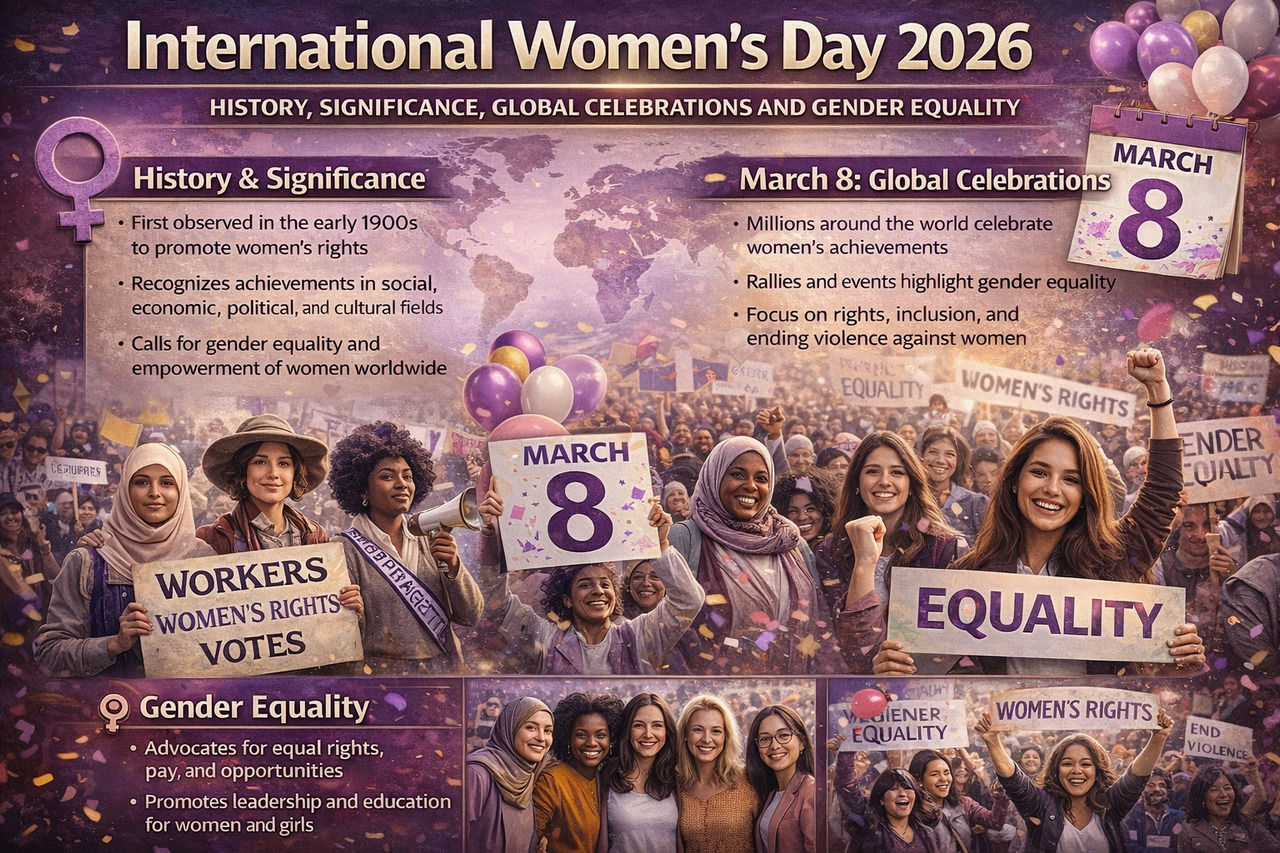
International Women’s Day (IWD), celebrated every year on March 8, is a global occasion dedicated to honoring the achievements, contributions, and rights of women across the world. It also serves as a powerful reminder of the ongoing struggle for gender equality and social justice. In 2026, International Women’s Day continues to highlight the progress made in advancing women's rights while drawing attention to the challenges that still remain.
Over the decades, this important day has evolved from a movement advocating for women’s labor rights into a global celebration of empowerment, equality, and recognition. Governments, organizations, communities, and individuals worldwide participate in activities that promote women’s leadership, achievements, and opportunities.
The Historical Origins of International Women’s Day
The roots of International Women’s Day can be traced back to the early 20th century when women across Europe and North America began organizing movements to demand better working conditions, voting rights, and fair wages.
The first significant step occurred in 1908, when thousands of women workers marched through New York City demanding shorter working hours, better pay, and the right to vote. This protest inspired further activism and laid the foundation for the creation of a dedicated day recognizing women's rights.
In 1910, during the International Socialist Women’s Conference held in Copenhagen, activist Clara Zetkin proposed the idea of an international day to promote women's rights and suffrage. The proposal was unanimously supported by participants from several countries.
The first official International Women’s Day was celebrated in 1911 in countries including Austria, Germany, Denmark, and Switzerland. Millions of people participated in rallies advocating for women's rights, including access to education, employment equality, and voting rights.
The date March 8 became globally recognized after women's protests in Russia during 1917 played a significant role in political change, ultimately leading to the establishment of the day as a symbol of women’s activism and progress.
The Significance of International Women’s Day
International Women’s Day carries deep social, cultural, and political significance. It serves multiple purposes that extend far beyond celebration.
Recognizing Women’s Achievements
One of the primary purposes of International Women’s Day is to recognize the achievements of women in fields such as politics, science, education, business, arts, and social activism. Women have played critical roles in shaping societies and contributing to economic development around the world.
Promoting Gender Equality
Despite considerable progress in women’s rights, gender inequality remains a major global issue. Women in many regions still face barriers related to education, employment opportunities, political representation, and access to healthcare.
International Women’s Day helps raise awareness about these issues and encourages governments and institutions to adopt policies that promote gender equality.
Empowering Future Generations
Another important goal of International Women’s Day is to inspire young girls and future generations. By highlighting the achievements of women leaders, scientists, educators, and innovators, the day motivates young people to pursue their ambitions and break societal barriers.
Global Celebrations of International Women’s Day
International Women’s Day is celebrated in many different ways across the world. Governments, non-governmental organizations, schools, and corporations organize events and campaigns to mark the occasion.
Public Events and Conferences
Many cities host conferences, panel discussions, and workshops focused on women's leadership, entrepreneurship, and social development. These events provide platforms for women to share experiences, discuss challenges, and promote collaboration.
Educational Programs
Schools and universities often organize educational programs that highlight the history of women's rights movements. These programs help students understand the importance of gender equality and the role women have played in shaping society.
Community Campaigns
Local communities often organize campaigns addressing important issues affecting women, such as domestic violence, education access, healthcare, and economic empowerment.
Social Media Campaigns
In the digital age, social media platforms have become powerful tools for promoting awareness. Millions of people use hashtags and online campaigns to share stories, highlight achievements, and advocate for gender equality.
Progress in Gender Equality
Over the past century, remarkable progress has been made in advancing women's rights and opportunities worldwide.
Political Representation
More women are now participating in political leadership than ever before. Several countries have elected women presidents, prime ministers, and parliament members. Increasing political representation ensures that women’s perspectives are included in policymaking.
Education Opportunities
Access to education for girls has improved significantly in many parts of the world. Education empowers women by providing knowledge, skills, and economic opportunities.
Workplace Participation
Women are increasingly participating in the global workforce, contributing to economic growth and innovation. Many organizations are now implementing policies aimed at promoting workplace equality and leadership opportunities for women.
Challenges That Still Exist
Despite these achievements, gender inequality continues to exist in many forms across the globe.
Wage Gap
Women often earn less than men for performing similar work. The gender wage gap remains a significant issue in many industries.
Limited Leadership Representation
Although progress has been made, women are still underrepresented in leadership positions in politics, business, and technology sectors.
Gender-Based Violence
Violence against women remains a serious global problem. International Women’s Day also highlights the need to protect women from discrimination, harassment, and abuse.
Education Inequality in Some Regions
In certain regions, girls still face barriers to education due to poverty, cultural restrictions, and lack of infrastructure.
The Role of Governments and Organizations
Governments and international organizations play an important role in promoting gender equality through policies and initiatives.
Key actions include:
-Implementing equal pay laws
-Promoting girls’ education programs
-Supporting women entrepreneurs
-Strengthening laws protecting women’s rights
International cooperation and strong policy frameworks are essential for achieving long-term gender equality.
The Importance of Individual Action
While governments and institutions play critical roles, individuals also contribute to advancing gender equality. People can support women’s empowerment by:
Promoting respect and equality in everyday life
-Encouraging girls’ education
-Supporting women-led initiatives
-Challenging discrimination and stereotypes
-Small actions collectively create meaningful social change.
Looking Ahead: International Women’s Day 2026
International Women’s Day 2026 continues to emphasize the importance of collective action to create a more inclusive and equitable world. The day reminds societies that gender equality benefits not only women but entire communities and economies.
By celebrating achievements and addressing remaining challenges, International Women’s Day encourages people worldwide to work together toward a future where women and men have equal opportunities to succeed.
Conclusion
International Women’s Day is more than a symbolic celebration; it is a global movement advocating equality, respect, and opportunity for women everywhere. From its historical roots in labor rights movements to its modern global recognition, the day represents both progress and the continuing struggle for justice.
As the world observes International Women’s Day 2026, it is an opportunity to reflect on the achievements of women throughout history, recognize the challenges that remain, and renew the commitment to building a society where gender equality becomes a reality for all.
You can read more:
-International Cooperation for Global Peace and Stability in a Changing World



Comments
Post a Comment