How Artificial Intelligence Is Transforming Daily Life
Introduction
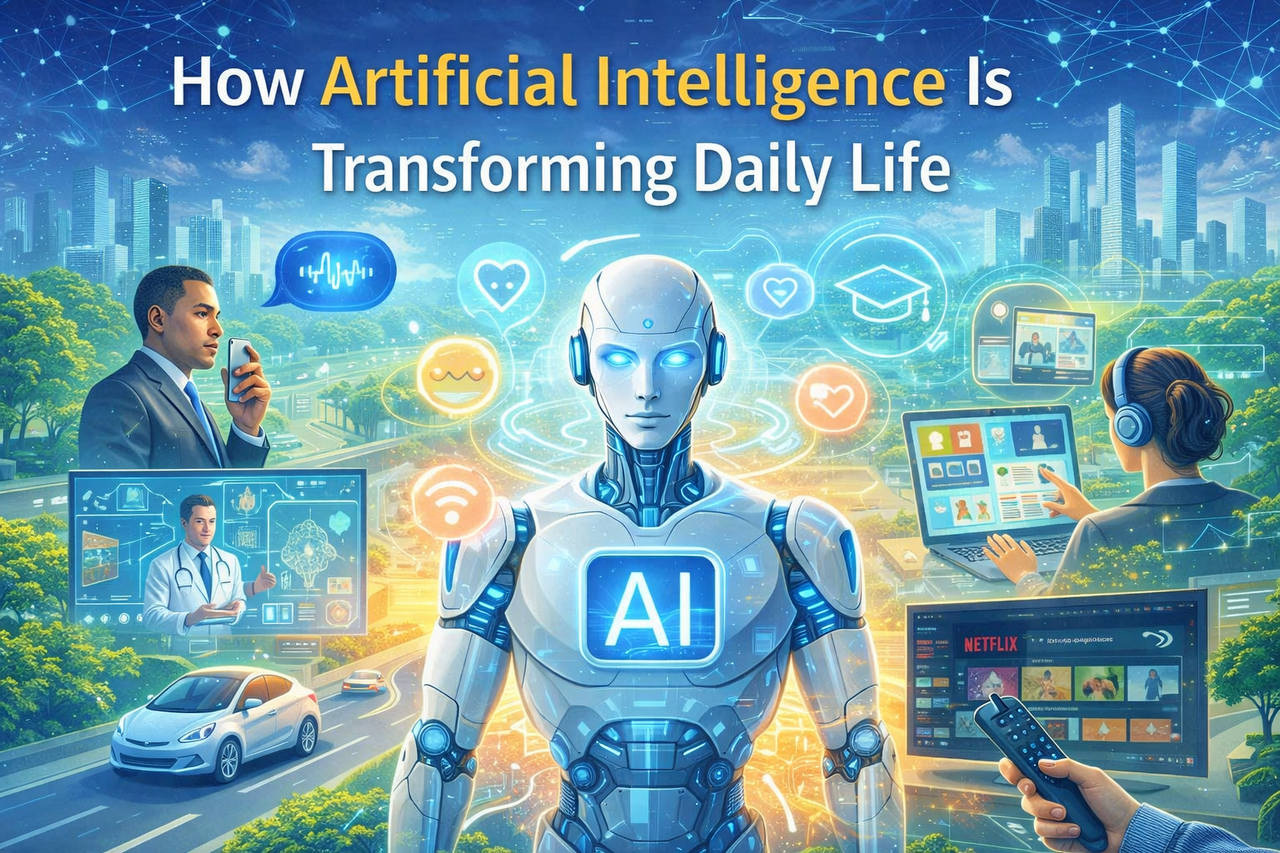
Artificial intelligence (AI) is no longer a futuristic concept found only in science fiction. Today, AI technologies are deeply integrated into everyday life, influencing how people communicate, work, travel, shop, and access information. From voice assistants that respond to commands to algorithms that recommend movies and products, artificial intelligence is reshaping modern society in profound ways.
Advances in machine learning, automation, and data analytics have allowed AI systems to perform tasks that once required human intelligence. Major technology companies such as Google, Microsoft, and OpenAI are investing heavily in AI research, accelerating innovations that impact industries and individuals alike. Besides, AI can generate much more ideas than a general human can do and which is being potential like human tuned.
As AI continues to evolve, its influence on daily life is expected to grow even further, transforming not only technology but also economies, education systems, and global communication.
AI in Communication and Digital Assistants
Artificial intelligence plays a significant role in modern communication. AI-powered virtual assistants such as Google Assistant and Siri help users perform tasks through voice commands, including sending messages, setting reminders, and searching for information.
Smarter Conversations and Chatbots
Businesses increasingly rely on AI chatbots to handle customer inquiries and provide instant responses. These systems can analyze user questions and deliver relevant answers, improving efficiency and customer service experiences.
AI-powered language tools also assist with translation, allowing people from different linguistic backgrounds to communicate more easily across borders. Even it absorbed the thought process of market insights.
Artificial Intelligence in Healthcare
One of the most significant impacts of AI can be seen in the healthcare sector. AI systems are helping doctors diagnose diseases more accurately and quickly by analyzing large volumes of medical data.
Early Disease Detection
Advanced AI algorithms can detect patterns in medical scans that may be difficult for human eyes to identify. This technology is particularly useful in identifying conditions such as cancer and heart disease at early stages.
Hospitals are also using AI to manage patient records, predict health risks, and develop personalized treatment plans. Even though AI technologies are becoming popular for completing doctor's successful operation
AI in Transportation and Smart Cities
Artificial intelligence is revolutionizing transportation systems and urban infrastructure.
Self-driving technologies, developed by companies such as Tesla, are designed to reduce accidents and improve road safety through automated driving systems.
Smart Traffic Management
Cities are increasingly adopting AI-based traffic management systems to monitor congestion and adjust traffic signals in real time. These innovations help reduce travel time, fuel consumption, and air pollution.
Public transportation networks are also benefiting from AI analytics that improve scheduling and route optimization.
Artificial Intelligence in Education
Education systems are undergoing rapid transformation due to AI technologies. Digital learning platforms use AI to personalize lessons according to students’ learning styles and progress.
Personalized Learning Experiences
AI-powered educational tools can analyze student performance and recommend customized study materials. This approach helps students learn at their own pace and improves overall learning outcomes.
Online education platforms are also expanding access to quality learning resources for people around the world.
AI in Everyday Consumer Technology
Many everyday technologies rely on artificial intelligence, often without users realizing it.
Streaming platforms such as Netflix use AI algorithms to recommend movies and TV shows based on user preferences. Similarly, online retailers use AI to suggest products tailored to customers’ interests and browsing behavior.
Smart home devices also rely on AI to control lighting, temperature, and security systems, creating more comfortable and energy-efficient living environments.
Ethical Challenges and Concerns
Despite its benefits, the rapid growth of artificial intelligence raises important ethical questions.
Experts warn that issues such as data privacy, job displacement due to automation, and algorithmic bias must be addressed carefully. Governments and international organizations are increasingly working to establish guidelines that ensure AI is developed responsibly and used for the benefit of society.
Balancing innovation with ethical considerations will be crucial as AI technologies continue to expand into new areas of life.
Future Outlook for Artificial Intelligence
Artificial intelligence is expected to become even more influential in the coming decades. As computing power increases and AI algorithms improve, new applications will likely emerge in fields such as climate research, agriculture, finance, and disaster prediction.
Experts believe AI could play a key role in solving global challenges, from improving healthcare systems to developing sustainable technologies that protect the environment.
Conclusion
Artificial intelligence is rapidly transforming the way people live, work, and interact with the world. From healthcare and education to transportation and entertainment, AI technologies are reshaping daily experiences and creating new opportunities for innovation.
While challenges related to ethics, privacy, and employment remain important considerations, the continued development of artificial intelligence offers enormous potential to improve efficiency, enhance human capabilities, and address complex global problems.
As societies adapt to these technological changes, artificial intelligence will likely remain one of the most powerful forces shaping the future of modern life.
You can read more:
-Digital Education Revolution in the Modern World: How Technology is Transforming Global Learning Systems
-Net5.5G Revolution Unveiled at MWC 2026: Global Broadband Enters AI Era
-Rise of Remote Work Technologies: How Digital Innovation Is Transforming Global Employment



Comments
Post a Comment