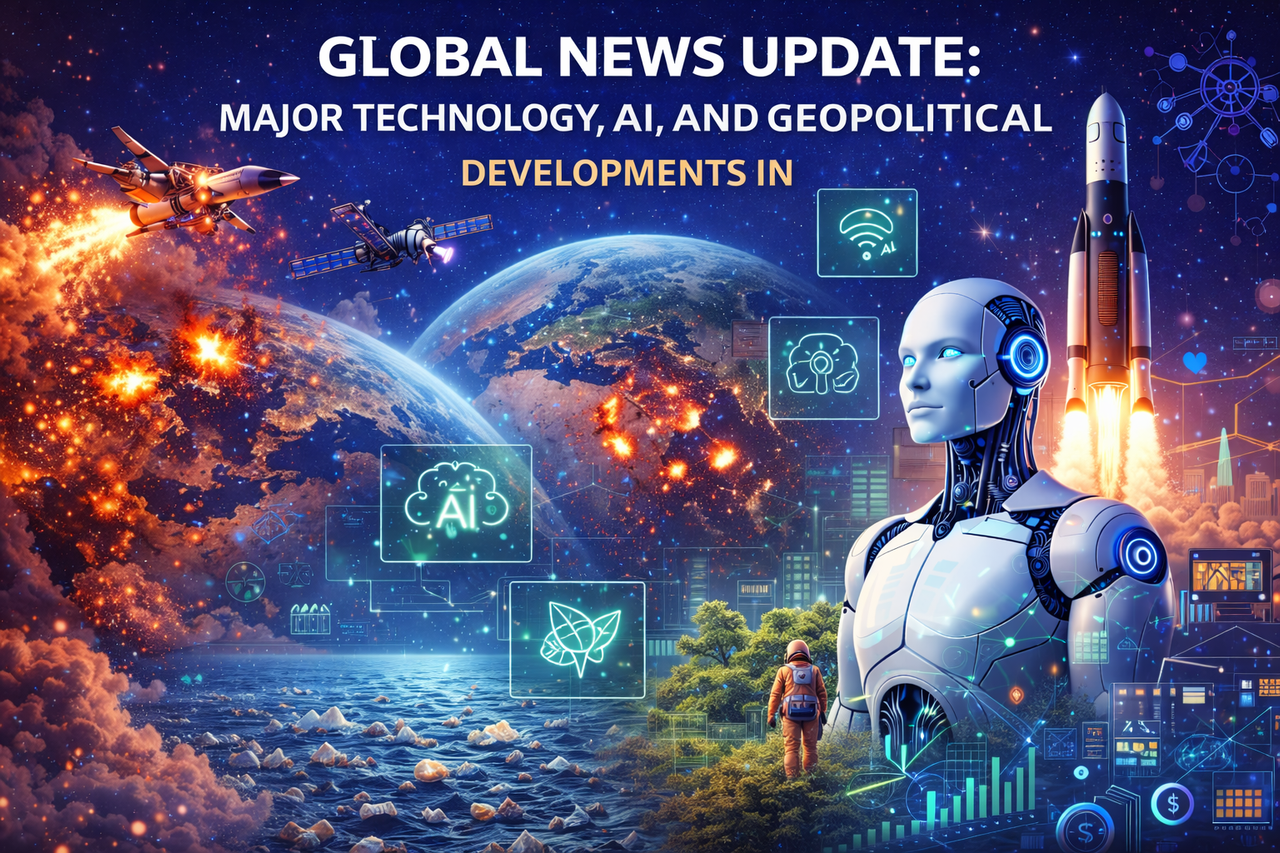
Global News Update: Major Technology, AI, and Geopolitical Developments in March 2026
The world continues to experience rapid developments in technology, geopolitics, and scientific research. From new artificial intelligence systems to increasing tensions in global politics, the latest headlines highlight the challenges and opportunities shaping the future of humanity.
In March 2026, several major global developments are capturing international attention. These include growing geopolitical tensions in the Middle East, new breakthroughs in artificial intelligence, expanding smart-city research, and continued advancements in space technology.
Here is a closer look at some of the most important global news stories today.
Rising Geopolitical Tensions in the Middle East
One of the most concerning global developments in recent weeks is the rising tension across parts of the Middle East. Military activities involving missile launches, drone operations, and air defense systems have been reported in several areas of the region.
Governments around the world are closely monitoring the situation as the conflict risks expanding further. Many international organizations are calling for diplomatic dialogue to reduce tensions and prevent escalation.
The situation has also raised concerns about potential impacts on global energy markets. The Middle East plays a crucial role in global oil production, and instability in the region can affect fuel prices and economic stability worldwide.
Diplomatic efforts are currently underway to stabilize the situation, but the coming weeks will likely determine whether tensions escalate or move toward negotiation.
Artificial Intelligence Expands into Environmental Protection
Artificial intelligence continues to play a growing role in addressing global environmental challenges. Researchers are now using advanced AI systems to monitor and track pollution across the world’s oceans.
By combining satellite imagery with machine-learning algorithms, scientists can identify floating debris and plastic waste in ocean waters more efficiently than before. This technology helps environmental organizations locate pollution hotspots and plan cleanup operations more effectively.
The use of AI in environmental protection demonstrates how technology can support sustainable development and help address global ecological issues.
As climate change and pollution continue to affect ecosystems worldwide, technological solutions like AI monitoring systems may become essential tools for protecting natural resources.
Smart City Research Gains Momentum
Urban populations continue to grow rapidly, leading researchers and policymakers to explore innovative ways to manage cities more efficiently. Smart-city technology has become one of the most promising approaches to improving urban infrastructure.
Smart cities rely on digital sensors, data analysis, and artificial intelligence to improve transportation systems, manage energy consumption, and optimize public services.
Recent research also focuses on integrating green spaces into urban environments. Scientists are studying how parks, urban forests, and green corridors can improve air quality, reduce heat in cities, and enhance public health.
By combining environmental planning with advanced digital technology, future cities may become more sustainable and better equipped to support growing populations.
Advances in Space Technology
Space exploration continues to advance as both government agencies and private companies invest heavily in new technologies.
Reusable rocket systems, improved satellite technologies, and autonomous spacecraft navigation are making space missions more efficient and affordable. These innovations are expected to play a major role in future exploration programs.
Scientists and engineers are working toward ambitious goals, including missions to the Moon, Mars, and beyond. Space exploration is also supporting research in areas such as climate monitoring, global communications, and disaster response.
The space industry is expected to grow significantly over the next decade as new technologies reduce launch costs and expand commercial opportunities.
Technology and the Global Economy
Technological innovation continues to drive economic growth worldwide. Artificial intelligence, automation, and digital platforms are transforming industries ranging from finance and healthcare to transportation and education.
Businesses are increasingly using data-driven tools to analyze market trends and improve decision-making processes. These technologies allow companies to operate more efficiently and respond quickly to changing economic conditions.
However, rapid technological change also brings challenges. Governments and organizations must address issues such as digital privacy, cybersecurity risks, and workforce adaptation.
Preparing workers for future jobs will require education systems to emphasize digital skills, problem-solving abilities, and technological literacy.
The Importance of Global Cooperation
Many of today’s global challenges cannot be solved by individual countries alone. Climate change, cybersecurity threats, and space exploration all require international cooperation.
Global partnerships allow nations to share resources, knowledge, and expertise in tackling complex problems.
For example, international scientific collaborations have led to important discoveries in medicine, environmental science, and astronomy.
As the world becomes increasingly interconnected, cooperation between governments, research institutions, and private organizations will play a critical role in shaping the future.
Conclusion
The latest global news highlights a world undergoing rapid transformation. Technological innovations are opening new possibilities in artificial intelligence, environmental protection, and space exploration. At the same time, geopolitical tensions and economic challenges remind us that global stability requires careful diplomacy and cooperation.
As technology continues to evolve and international events unfold, the coming years will likely bring even more significant developments that shape the future of societies around the world.
Staying informed about global trends and innovations will remain essential for understanding how the modern world continues to change.
You can read more:
-Peace Negotiations in Conflict Zones: Global Challenges and Diplomatic Solutions



Comments
Post a Comment