Sustainable Agriculture and the Future of Food
Introduction
As the global population continues to grow, the challenge of producing enough food while protecting the environment becomes increasingly urgent. Agriculture is responsible for feeding billions of people worldwide, yet traditional farming methods often place significant pressure on natural resources such as soil, water, and biodiversity. Sustainable agriculture has emerged as a promising solution to this challenge, offering a way to produce food efficiently while maintaining ecological balance and ensuring long-term food security.
The future of food depends heavily on how farming evolves in the coming decades. Innovations in agricultural technology, improved farming practices, and a greater focus on environmental stewardship are shaping a new agricultural revolution. Sustainable agriculture aims to meet present food needs without compromising the ability of future generations to produce their own food.
Understanding Sustainable Agriculture
Sustainable agriculture refers to farming practices that focus on environmental health, economic profitability, and social equity. Instead of prioritizing short-term production gains, sustainable farming seeks to create systems that remain productive and resilient over time.
Key principles of sustainable agriculture include:
-Protecting soil health
-Reducing chemical inputs
-Conserving water resources
-Preserving biodiversity
-Supporting local farming communities
These practices help create a balanced agricultural system that benefits both farmers and the environment.
The Growing Global Food Demand
The world's population is projected to reach nearly 10 billion people by 2050. Feeding such a large population requires significant increases in food production. However, expanding farmland is not always possible due to environmental concerns and limited land availability.
Traditional agriculture often relies heavily on synthetic fertilizers, pesticides, and large-scale monoculture farming. While these methods can increase yields in the short term, they may degrade soil quality, reduce biodiversity, and contribute to climate change over time.
Sustainable agriculture offers an alternative path by improving productivity while reducing environmental damage.
Environmental Benefits of Sustainable Farming
One of the most significant advantages of sustainable agriculture is its ability to protect natural ecosystems.
Soil Conservation
Healthy soil is essential for productive farming. Sustainable practices such as crop rotation, cover cropping, and reduced tillage help maintain soil fertility and prevent erosion. Over time, these methods improve soil structure and increase the soil's ability to store nutrients and water.
Water Management
Agriculture consumes a large portion of global freshwater supplies. Sustainable farming techniques emphasize efficient irrigation systems, rainwater harvesting, and water recycling to reduce water waste.
Biodiversity Protection
Industrial farming often replaces diverse ecosystems with single crop fields. Sustainable agriculture encourages biodiversity by integrating multiple crops, maintaining natural habitats, and promoting beneficial insects and wildlife.
Technology Transforming Agriculture
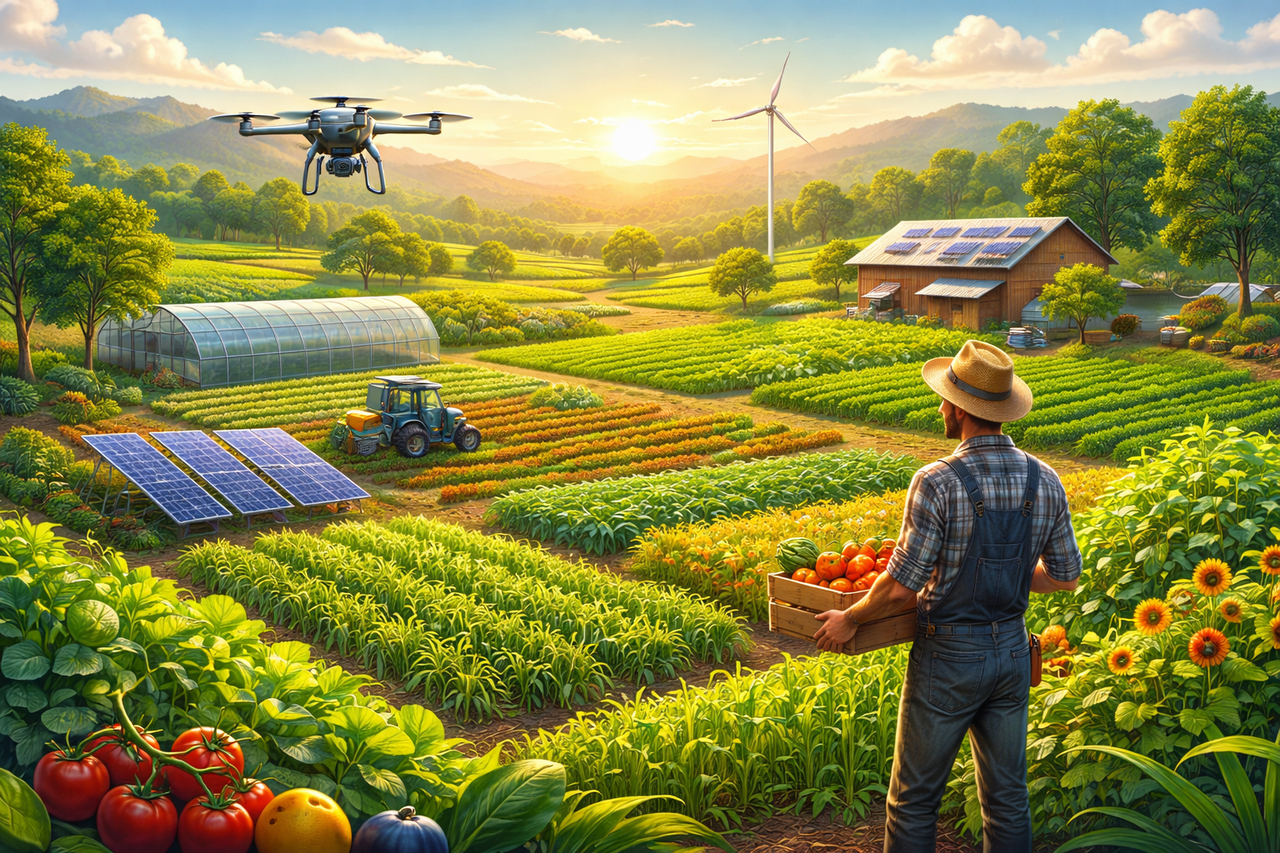
Modern technology is playing a critical role in advancing sustainable farming. Innovations are helping farmers increase efficiency while minimizing environmental impact.
Precision Farming
Precision farming uses advanced technologies such as sensors, satellite imagery, and data analytics to optimize farming operations. Farmers can monitor soil conditions, crop health, and weather patterns to make better decisions about irrigation, fertilization, and pest control.
Smart Irrigation Systems
Smart irrigation technologies help farmers deliver the right amount of water at the right time, reducing waste and improving crop yields.
Agricultural Robotics
Robots and automated machines are increasingly used to plant seeds, harvest crops, and remove weeds. These technologies can reduce labor costs and minimize the use of harmful chemicals.
Biotechnology and Crop Innovation
Biotechnology is also contributing to sustainable agriculture by developing crops that are more resistant to pests, diseases, and extreme weather conditions.
Climate Change and Agriculture
Climate change is one of the greatest threats to global food production. Rising temperatures, unpredictable rainfall patterns, and extreme weather events can significantly affect crop yields.
Sustainable agriculture helps address these challenges by promoting climate-resilient farming systems. Practices such as agroforestry, organic farming, and regenerative agriculture help store carbon in the soil and reduce greenhouse gas emissions.
By adopting sustainable methods, farmers can adapt to changing climate conditions while contributing to environmental protection.
The Role of Local and Urban Farming
Local food systems are becoming increasingly important in the future of food production. Urban farming initiatives are bringing agriculture closer to consumers, reducing transportation costs and emissions.
Vertical farming and rooftop gardens are examples of innovative urban agriculture practices. These methods allow food to be grown in cities using minimal land while producing fresh vegetables year-round.
Local food production also strengthens community resilience and supports small-scale farmers.
Reducing Food Waste
Food waste is another major challenge affecting global food security. A significant portion of food produced worldwide is lost during harvesting, storage, transportation, and consumption.
Sustainable agriculture addresses this issue by improving storage systems, supply chains, and food distribution networks. Educating consumers about responsible food consumption also plays a critical role in reducing waste.
Supporting Farmers and Rural Communities
Sustainable agriculture is not only about protecting the environment; it also focuses on improving the livelihoods of farmers.
Small farmers often face financial challenges due to fluctuating market prices, climate risks, and limited access to resources. Sustainable farming initiatives promote fair trade practices, better market access, and community-based agricultural programs.
Supporting farmers ensures that food production remains stable and that rural communities continue to thrive.
Policy and Global Cooperation
Governments and international organizations play a crucial role in promoting sustainable agriculture. Policies that encourage responsible farming practices, research funding, and agricultural education can accelerate the transition to sustainable food systems.
International cooperation is also essential in addressing global food challenges. Collaborative efforts can help share knowledge, technology, and resources across countries.
Role of the Food and Agriculture Organization in Sustainable Agriculture
The Food and Agriculture Organization (FAO), a specialized agency of the United Nations, plays a crucial role in promoting sustainable agriculture worldwide. Its mission is to eliminate hunger, improve nutrition, and ensure food security while protecting natural resources for future generations.
1. Promoting Sustainable Farming Practices
FAO supports farmers and governments by encouraging environmentally friendly farming methods. These include crop rotation, soil conservation, water management, and reduced use of harmful chemicals. Such practices help maintain soil fertility and protect biodiversity.
2. Providing Global Research and Data
FAO conducts extensive research on agriculture, climate change, and food production. By collecting and analyzing global agricultural data, the organization helps countries develop policies that support sustainable food systems.
3. Supporting Farmers and Rural Communities
FAO provides technical assistance, training programs, and financial guidance to farmers, especially in developing countries. These initiatives help farmers adopt modern technologies and sustainable farming techniques.
4. Addressing Climate Change and Food Security
Climate change poses a major threat to agriculture. FAO works with countries to develop climate-resilient farming systems that can withstand droughts, floods, and extreme weather conditions.
5. Promoting Global Food Security
Through international cooperation, FAO helps nations strengthen food supply chains, reduce food waste, and improve agricultural productivity while maintaining environmental sustainability.
The efforts of the Food and Agriculture Organization are vital for building a sustainable agricultural future. By promoting responsible farming practices and supporting global food systems, FAO helps ensure that future generations will have access to safe and nutritious food.
The Future of Food
The future of food production will likely involve a combination of traditional farming knowledge and advanced technologies. Innovations such as plant-based foods, alternative proteins, and climate-resilient crops are already transforming the global food industry.
Consumers are also becoming more conscious of how their food is produced. Demand for organic, locally sourced, and environmentally friendly products continues to grow.
This shift in consumer behavior encourages farmers and companies to adopt more sustainable practices.
Conclusion
Sustainable agriculture represents a critical pathway toward a secure and resilient global food system. By protecting natural resources, embracing technological innovation, and supporting farming communities, sustainable farming practices can help meet the world's growing food demands.
The future of food depends on collective action from farmers, governments, scientists, and consumers. Through sustainable agriculture, it is possible to create a food system that nourishes people while preserving the planet for future generations.
You can read more:
-Global Food Security Crisis in 2026: Rising Costs, Climate Change, and the Future of Agriculture



Comments
Post a Comment