Bangladesh’s energy sector is undergoing structural transformation as policymakers confront rising electricity demand, mounting fuel import costs, currency pressures, and climate vulnerability. In 2026, renewable energy expansion is no longer framed as an environmental aspiration—it is an economic, fiscal, and geopolitical necessity.
This comprehensive analysis examines Bangladesh’s power sector dynamics, renewable capacity targets, financing mechanisms, grid modernization challenges, and long-term economic implications.
1. Structural Overview of Bangladesh’s Power Sector
Bangladesh’s electricity system has historically relied on:
-Domestic natural gas
-Imported liquefied natural gas (LNG)
-Furnace oil and diesel-based generation
-Coal-fired power plants
The Bangladesh Power Development Board (BPDB) oversees generation planning and procurement. Over the past decade, installed capacity expanded rapidly to support industrial growth and urbanization. However, capacity growth has not always translated into reliable supply due to fuel shortages and foreign exchange constraints.
Key structural vulnerabilities include:
-Overdependence on fossil fuel imports
-Exposure to global commodity price volatility
-Subsidy burdens on the national budget
-Transmission bottlenecks
The energy transition debate is therefore inseparable from macroeconomic stability.
2. Why Renewable Energy Is Now a Strategic Priority
The Government of Bangladesh has elevated renewable energy to a central strategic pillar for five main reasons:
2.1 Foreign Exchange Pressure
Fuel imports consume significant foreign reserves. Renewable energy reduces long-term import dependency.
2.2 Rising Electricity Demand
Economic growth, digital expansion, and urbanization are increasing electricity consumption annually.
2.3 Climate Vulnerability
Bangladesh remains one of the most climate-vulnerable countries globally, strengthening the case for low-carbon development.
2.4 Global Financing Access
Climate funds and concessional loans are increasingly tied to renewable and sustainable infrastructure.
2.5 Long-Term Cost Efficiency
Although capital-intensive upfront, solar and wind have low marginal operating costs.
As a result, renewable energy is increasingly positioned as both an energy security and fiscal reform strategy.
3. Renewable Capacity Expansion Targets Toward 2030
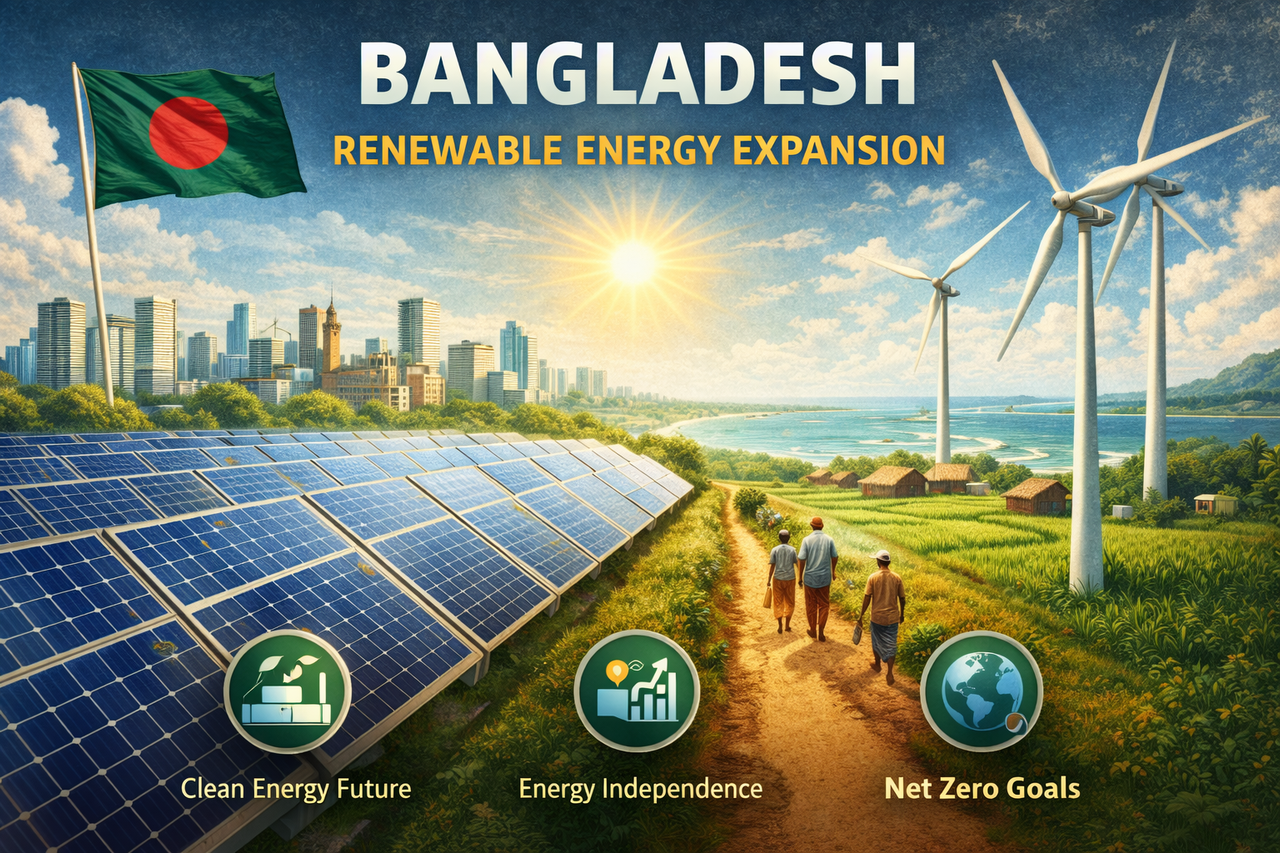
Policy roadmaps indicate ambitious renewable targets by 2030, with solar energy leading expansion plans.
3.1 Utility-Scale Solar Parks
Large-scale solar farms are being developed across multiple districts. These projects aim to supply grid-connected clean power at competitive tariffs.
3.2 Rooftop Solar Systems
Urban rooftop solar adoption is being incentivized through net-metering frameworks. Commercial buildings, garment factories, and educational institutions are key adopters.
3.3 Hybrid and Storage Projects
Hybrid projects integrating solar, wind, and battery storage are under policy review to stabilize intermittent generation.
3.4 Rural Solar Mini-Grids
Off-grid and mini-grid systems continue expanding in remote areas, improving rural electrification and small business productivity.
The diversification approach seeks to reduce systemic risk while scaling renewables responsibly.
4. Institutional and Regulatory Landscape
Renewable implementation depends heavily on regulatory efficiency.
The Sustainable and Renewable Energy Development Authority (SREDA) plays a central role in policy formulation, target-setting, and stakeholder coordination.
Key regulatory instruments include:
-Net metering guidelines
-Feed-in tariff structures
-Competitive bidding frameworks
-Power purchase agreements (PPAs)
However, bureaucratic delays, land acquisition procedures, and financing approval timelines remain bottlenecks.
Regulatory clarity and contract enforcement will be essential to attract sustained foreign investment.
5. International Partnerships and Climate Finance
Bangladesh’s renewable push is reinforced by international cooperation.
The International Renewable Energy Agency (IRENA) provides technical support in grid integration, policy benchmarking, and investment structuring.
Additionally, multilateral development banks and climate funds are financing:
-Transmission upgrades
-Utility-scale solar parks
-Energy efficiency programs
-Battery storage pilots
Green financing instruments, including sustainability-linked bonds, are under exploration to diversify funding sources.
Access to concessional financing reduces capital costs and accelerates implementation.
6. Grid Modernization and Infrastructure Constraints
Renewable expansion without grid modernization risks instability.
Current challenges include:
-Limited transmission capacity
-Voltage fluctuation risks
-Frequency management issues
-Inadequate storage infrastructure
To address these issues, Bangladesh is considering:
-Smart grid deployment
-Advanced metering infrastructure
-Regional grid interconnections
-Grid-scale battery storage
-Grid reform is arguably as important as generation expansion.
7. Macroeconomic Impact of Renewable Transition
Renewable expansion could reshape Bangladesh’s macroeconomic outlook.
7.1 Reduced Fuel Import Bill
Lower LNG and oil imports would ease foreign reserve pressure.
7.2 Fiscal Stability
Reduced subsidy burdens could improve public finances.
7.3 Investment Attraction
Green energy projects attract foreign direct investment.
7.4 Industrial Competitiveness
Lower long-term energy costs enhance export competitiveness, particularly in the garment sector.
Renewables are therefore not merely environmental assets—they are macroeconomic stabilizers.
8. Employment and Industrial Development
The renewable sector generates employment across
-Solar panel installation
-Electrical engineering
-Maintenance services
-Battery and inverter manufacturing
-Energy auditing
Local manufacturing incentives could reduce import dependency in solar components and create new industrial clusters.
Skills development programs will be essential to ensure workforce readiness.
9. Risks and Structural Barriers
Despite positive momentum, several structural risks persist:
-Land scarcity for large-scale projects
-Financing gaps for smaller developers
-Currency depreciation affecting equipment imports
-Policy inconsistency concerns
-Delays in payment settlements under power purchase agreements
Investor confidence depends on predictable governance and financial discipline.
10. Regional Energy Cooperation
Cross-border energy trade, particularly with neighboring countries, could complement domestic renewable expansion.
Regional interconnection agreements allow:
-Electricity imports during peak shortages
-Renewable balancing across borders
-Shared transmission infrastructure
-Such cooperation strengthens energy resilience and geopolitical stability.
11. Long-Term Outlook: 2030 and Beyond
Energy analysts forecast that Bangladesh’s renewable share will expand significantly by 2030 if:
-Policy continuity remains strong
-Financing channels expand
-Grid upgrades accelerate
-Storage solutions scale
Declining solar panel costs and improving battery efficiency will likely make renewables increasingly competitive against fossil fuels.
The transition is not expected to eliminate fossil fuels entirely in the near term, but it will reduce their dominance.
Conclusion: A Defining Decade for Bangladesh’s Power Sector
Bangladesh’s renewable energy transition represents one of the most consequential economic reforms of the decade. It intersects with:
-Energy security
-Fiscal management
-Climate adaptation
-Industrial competitiveness
-Employment generation
The path forward requires synchronized policy reform, institutional efficiency, grid modernization, and investor confidence.
If implementation remains disciplined and financing flows remain stable, Bangladesh could significantly reduce fossil fuel dependence within the next decade—reshaping its power sector into a more resilient, sustainable, and economically balanced system.
The renewable transition is no longer optional. It is foundational to Bangladesh’s long-term economic trajectory and national stability.
You can read more:
-Climate Vulnerability in Coastal Bangladesh: Risks & Future
-Future of Renewable Energy: Solar vs Wind Power Global Impact
-Regional Climate Cooperation Efforts Expand as Countries Unite Against Climate Change



Comments
Post a Comment