Air Pollution and Public Health Risks Worldwide
Introduction
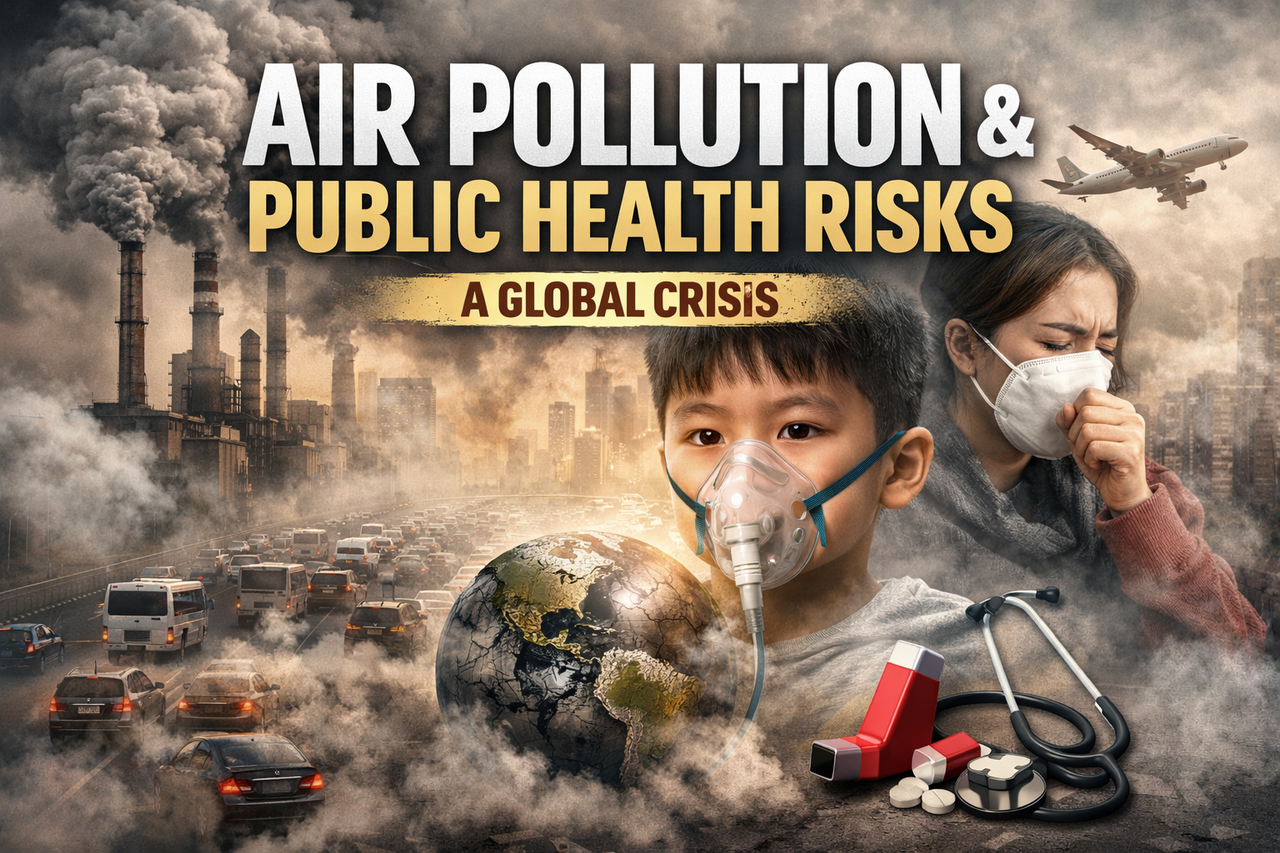
Air pollution has emerged as one of the most serious environmental and public health challenges of the modern world. Rapid industrialization, urbanization, transportation emissions, and the burning of fossil fuels have significantly increased the level of pollutants in the atmosphere. These pollutants not only harm ecosystems but also pose severe risks to human health.
Across many cities and regions, poor air quality has become a daily concern for millions of people. According to global health experts, air pollution contributes to respiratory illnesses, cardiovascular diseases, and other serious medical conditions. Vulnerable populations such as children, the elderly, and individuals with pre-existing health conditions are particularly at risk.
International health authorities like the World Health Organization warn that air pollution is responsible for millions of premature deaths every year. As the world continues to develop economically and technologically, addressing air pollution has become a crucial priority for governments, scientists, and environmental organizations worldwide.
Major Sources of Air Pollution
Air pollution originates from a variety of human and natural activities. However, human activities remain the primary drivers of deteriorating air quality across the globe.
One of the most significant sources is the burning of fossil fuels such as coal, oil, and natural gas. Power plants, industrial facilities, and residential heating systems release harmful pollutants into the air when these fuels are burned.
Transportation also plays a major role in air pollution. Vehicles powered by gasoline or diesel engines emit nitrogen oxides, carbon monoxide, and particulate matter. In densely populated cities, heavy traffic contributes significantly to urban air pollution.
Industrial manufacturing processes release chemical pollutants and fine particles into the atmosphere. Factories producing steel, cement, chemicals, and other materials often generate emissions that affect both local and regional air quality.
Agricultural activities can also contribute to pollution through the use of fertilizers, pesticides, and livestock farming. These practices release ammonia and other pollutants that combine with industrial emissions to form harmful airborne particles.
In some regions, natural factors such as wildfires, volcanic eruptions, and dust storms also contribute to temporary increases in air pollution.
Health Effects of Air Pollution
The impact of air pollution on human health is significant and wide-ranging. When people inhale polluted air, tiny particles and harmful gases enter the lungs and bloodstream, potentially causing serious medical conditions.
Respiratory diseases are among the most common health problems associated with air pollution. Long-term exposure to polluted air increases the risk of conditions such as asthma, bronchitis, and chronic obstructive pulmonary disease.
Cardiovascular problems are another major concern. Research has shown that exposure to air pollution can increase the risk of heart attacks, strokes, and high blood pressure. Pollutants can trigger inflammation in blood vessels and disrupt normal cardiovascular function.
Children are particularly vulnerable to air pollution because their lungs are still developing. Exposure to polluted air during childhood can impair lung growth and increase the likelihood of respiratory illnesses later in life.
Elderly individuals and people with existing health conditions may also experience more severe health effects due to weakened immune systems and increased sensitivity to environmental pollutants.
According to the World Health Organization, air pollution is linked to millions of premature deaths each year, highlighting the urgent need for global action.
Urban Air Pollution and Megacities
Urban areas are often the most affected by air pollution due to high population density, heavy traffic, and concentrated industrial activities. Many large cities around the world experience hazardous air quality levels during certain times of the year.
Cities such as New Delhi, Beijing, and Mexico City have faced significant air pollution challenges in recent decades. Smog, a combination of pollutants and atmospheric conditions, can create visible haze that reduces visibility and harms public health.
Urban air pollution is often worsened by temperature inversions, a weather phenomenon that traps pollutants near the ground. This prevents pollutants from dispersing into the upper atmosphere, causing pollution levels to accumulate.
Governments in many cities have implemented policies such as vehicle emission regulations, industrial restrictions, and expanded public transportation systems to reduce pollution levels.
Despite these efforts, rapid urban growth continues to place pressure on air quality in many metropolitan areas.
Environmental Consequences of Air Pollution
Air pollution not only affects human health but also has significant environmental consequences. Pollutants can damage ecosystems, contaminate soil and water, and contribute to climate change.
One of the most well-known environmental impacts is acid rain. When sulfur dioxide and nitrogen oxides react with water vapor in the atmosphere, they form acidic compounds that fall to the ground as rain. Acid rain can damage forests, lakes, and agricultural land.
Air pollution also contributes to global warming through the release of greenhouse gases such as carbon dioxide and methane. These gases trap heat in the Earth's atmosphere and lead to rising global temperatures.
The United Nations has emphasized that reducing air pollution is essential for achieving global climate goals and protecting ecosystems.
Global Efforts to Reduce Air Pollution
Governments and international organizations are increasingly recognizing the need for coordinated action to reduce air pollution. Various policies and initiatives have been introduced to improve air quality and protect public health.
Many countries are investing in renewable energy technologies to reduce dependence on fossil fuels. Solar power, wind energy, and hydropower produce electricity without generating harmful air pollutants.
Transportation systems are also undergoing significant changes. Electric vehicles and public transportation networks are being promoted as alternatives to gasoline-powered vehicles.
Environmental regulations play a critical role in controlling emissions from industries and power plants. Governments enforce air quality standards and require companies to adopt cleaner technologies.
International cooperation is also essential for addressing pollution that crosses national borders. Global agreements and environmental frameworks encourage countries to work together to reduce emissions and protect the atmosphere.
The Role of Public Awareness
Public awareness and community engagement are important components of air pollution reduction efforts. Individuals can take actions that help reduce pollution and protect public health.
Simple steps such as using public transportation, reducing energy consumption, and supporting environmentally friendly products can contribute to improved air quality.
Education programs also play a key role in informing people about the dangers of pollution and encouraging sustainable behaviors.
When communities, governments, and industries work together, meaningful progress can be achieved in reducing pollution and protecting the environment.
Conclusion
Air pollution remains one of the most pressing global health challenges of the modern era. Its effects on human health, environmental sustainability, and economic development make it a critical issue that requires urgent attention.
Organizations such as the World Health Organization and the United Nations continue to emphasize the importance of reducing pollution and promoting cleaner technologies.
By adopting sustainable energy solutions, strengthening environmental regulations, and increasing public awareness, countries can significantly reduce air pollution levels and protect public health.
The fight against air pollution is not only an environmental responsibility but also a vital step toward ensuring a healthier and more sustainable future for people around the world.
You can read more:
-Melting Glaciers and Rising Sea Levels: Causes, Impacts, and Global Solutions
-Plastic Pollution Crisis: Which Countries Produce the Most Waste?
-Global Climate Change in 2026: Major Environmental Challenges and Solutions
-Climate Vulnerability in Coastal Bangladesh: Risks, Impacts & Future Outlook
-Bangladesh Renewable Energy Transition 2026: In-Depth Power Sector Analysis & Future Outlook



Comments
Post a Comment