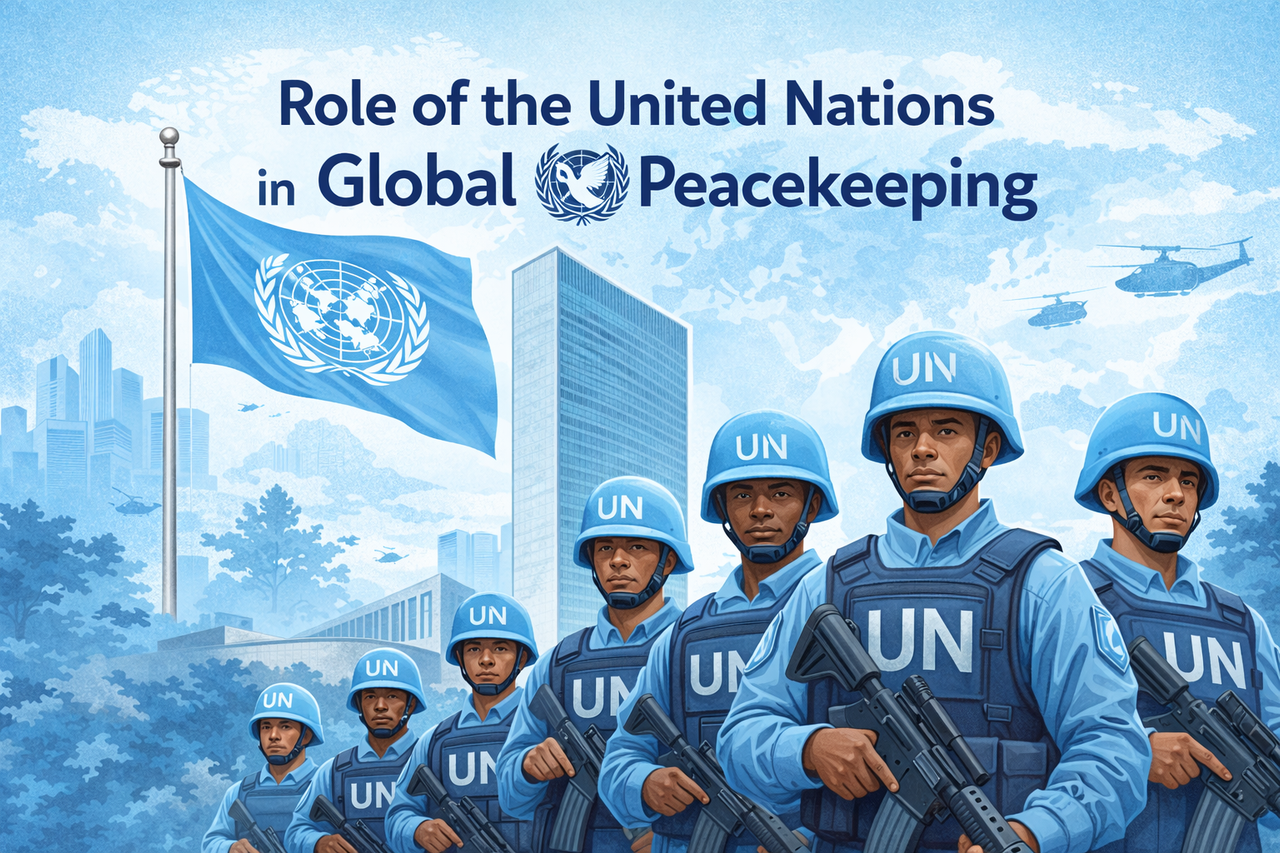
Role of the United Nations in Global Peacekeeping
Introduction
Since its establishment in 1945, the United Nations (UN) has played a central role in maintaining international peace and security. Created in the aftermath of World War II, the organization was designed to prevent future conflicts and foster cooperation among nations. One of its most critical functions is peacekeeping—deploying international personnel to conflict zones to help stabilize regions, protect civilians, and support political solutions.
Over the decades, UN peacekeeping has evolved from simple monitoring missions to complex, multidimensional operations. Today, it operates in some of the most fragile and conflict-affected regions of the world. Despite facing numerous challenges, the UN remains a key player in global peace efforts.
What is UN Peacekeeping?
UN peacekeeping refers to the deployment of military, police, and civilian personnel to conflict zones with the aim of maintaining or restoring peace. These missions are authorized by the UN Security Council and operate under specific mandates.
Peacekeeping missions are guided by three core principles:
-Consent of the parties involved
-Impartiality
-Non-use of force except in self-defense and defense of the mandate
Unlike traditional military operations, UN peacekeeping focuses on diplomacy, negotiation, and support rather than combat.
Historical Background of Peacekeeping
The first UN peacekeeping mission was established in 1948 in the Middle East to monitor the Arab-Israeli ceasefire. Since then, more than 70 missions have been deployed worldwide.
During the Cold War, peacekeeping missions were limited due to political tensions between major powers. However, after the Cold War ended, the number and complexity of missions increased significantly. The UN began addressing civil wars, ethnic conflicts, and humanitarian crises.
Some notable missions include:
-Peacekeeping efforts in Africa (e.g., Congo, Sudan)
-Missions in the Balkans during the 1990s
-Stabilization operations in Haiti
These missions have helped prevent conflicts from escalating and supported post-war recovery.
Key Roles of the United Nations in Peacekeeping
1. Conflict Prevention
One of the primary roles of the UN is to prevent conflicts before they escalate. Through diplomacy, mediation, and early warning systems, the organization works to resolve tensions between nations or groups.
Special envoys and mediators are often sent to negotiate peace agreements and reduce hostilities. Preventive diplomacy has been successful in many cases, avoiding large-scale violence.
2. Maintaining Ceasefires
In active conflict zones, UN peacekeepers monitor ceasefires and ensure that agreements between conflicting parties are respected. Their presence helps build trust and reduces the likelihood of renewed fighting.
Peacekeepers often patrol buffer zones, observe troop movements, and report violations to the UN Security Council.
3. Protecting Civilians
Modern peacekeeping missions place a strong emphasis on civilian protection. In many conflict zones, civilians are the most vulnerable to violence, displacement, and human rights abuses.
UN peacekeepers are tasked with:
-Preventing attacks on civilians
-Providing safe zones
-Supporting humanitarian aid delivery
This role has become increasingly important in regions affected by terrorism and internal conflicts.
4. Supporting Political Processes
Peacekeeping missions often assist countries in transitioning from conflict to peace. This includes supporting elections, strengthening governance, and promoting the rule of law.
The UN helps organize free and fair elections, ensuring that citizens can participate in democratic processes. It also works with local governments to build institutions that can sustain long-term peace.
5. Disarmament and Reintegration
After conflicts, one of the biggest challenges is dealing with armed groups. The UN plays a crucial role in disarmament, demobilization, and reintegration (DDR) programs.
These programs aim to:
-Collect weapons from former combatants
-Help fighters return to civilian life
-Provide training and employment opportunities
Successful DDR programs reduce the risk of renewed conflict.
6. Promoting Human Rights
The UN integrates human rights protection into all peacekeeping operations. Peacekeepers monitor abuses, support legal reforms, and help establish justice systems.
They work closely with local authorities and international organizations to ensure accountability and promote equality.
Structure of UN Peacekeeping Missions
UN peacekeeping missions are composed of:
-Military personnel: Provide security and protection
-Police forces: Maintain law and order
-Civilian staff: Handle administration, human rights, and development
These components work together to achieve the mission’s objectives.
Funding for peacekeeping comes from member states, with contributions based on their economic capacity.
Successes of UN Peacekeeping
UN peacekeeping has achieved several notable successes over the years:
1. Namibia (1989-1990)
The UN successfully oversaw Namibia’s transition to independence, ensuring free elections and political stability.
2. Liberia (2003-2018)
Peacekeeping efforts helped end a brutal civil war and supported the country’s recovery and democratic development.
3. Cambodia (1992-1993)
The UN played a key role in organizing elections and rebuilding institutions after years of conflict.
These examples demonstrate the UN’s ability to facilitate peace and stability when conditions are favorable.
Challenges Facing UN Peacekeeping
Despite its successes, UN peacekeeping faces several challenges:
1. Limited Resources
Peacekeeping missions often operate with limited funding, personnel, and equipment. This can affect their ability to respond effectively to crises.
2. Complex Conflicts
Modern conflicts are more complex, involving multiple actors, including non-state groups and terrorists. This makes peacekeeping more difficult.
3. Political Constraints
The UN Security Council must approve all missions, and political disagreements among member states can delay or limit action.
4. Safety of Peacekeepers
Peacekeepers often operate in dangerous environments, facing threats from armed groups. Ensuring their safety is a constant concern.
5. Criticism and Accountability
Some missions have faced criticism for failing to prevent violence or for misconduct by personnel. The UN has taken steps to improve accountability and transparency.
Future of UN Peacekeeping
The future of UN peacekeeping will depend on its ability to adapt to changing global dynamics. Key areas of focus include:
-Improving technology and intelligence
-Enhancing training for peacekeepers
-Strengthening partnerships with regional organizations
-Increasing focus on conflict prevention
The UN is also working to make missions more efficient and responsive to local needs.
Importance of Global Cooperation
Peacekeeping is a collective effort that requires cooperation among nations. Member states contribute troops, funding, and expertise.
Without global support, the UN cannot effectively carry out its missions. International cooperation remains essential for maintaining peace and security.
Conclusion
The United Nations plays a vital role in global peacekeeping, helping to prevent conflicts, protect civilians, and support post-war recovery. While challenges remain, its contributions to international stability are significant.
Peacekeeping is not a perfect solution, but it provides hope for millions of people living in conflict zones. As the world continues to face new threats, the UN’s role in maintaining peace will remain more important than ever.
You can read more related articles:
-International Cooperation for Global Peace and Stability in a Changing World
-Global Peace Initiative 2026: Board of Peace, Ukraine Talks, and Gaza Ceasefire Efforts Gain Global Attention



Comments
Post a Comment