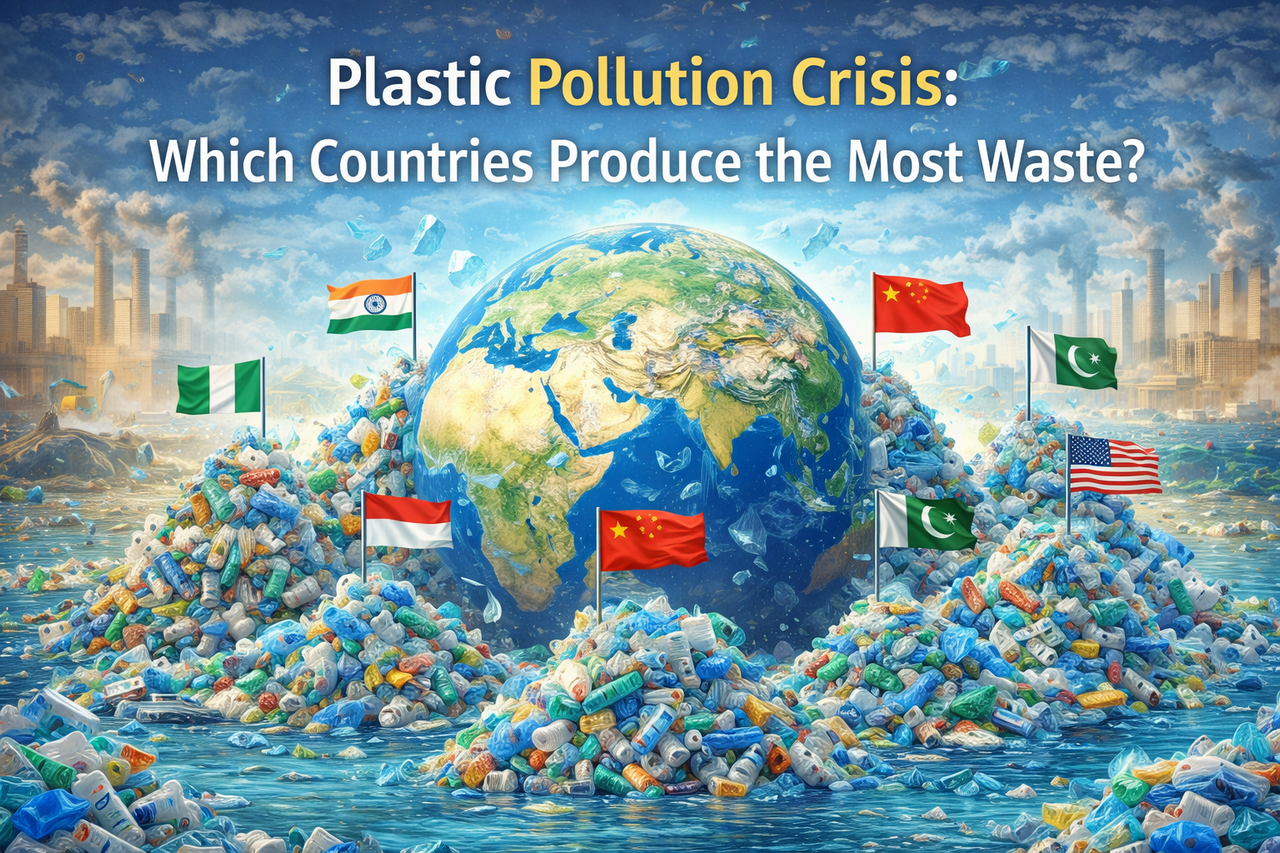
Plastic Pollution Crisis: Which Countries Produce the Most Waste?
Introduction
Plastic pollution has emerged as one of the most serious environmental challenges facing the world today. Over the past few decades, plastic production has grown dramatically due to its affordability, durability, and versatility. From food packaging and shopping bags to electronics and medical equipment, plastics are used in almost every sector of modern life. However, this convenience comes with a heavy environmental cost. World is staying at high risk and the impact can be seen turnaround the world's each and every corner.
Every year, millions of tons of plastic waste are generated across the globe. A significant portion of this waste is not properly managed and eventually ends up in landfills, rivers, and oceans. Once released into the environment, plastics can persist for hundreds of years without fully decomposing. Instead, they break down into tiny particles known as microplastics, which are now being found in soil, drinking water, and even the human body.
Scientists and environmental organizations have warned that the world is facing a growing plastic pollution crisis. Understanding which countries generate the most plastic waste and why they do so is an important step toward developing effective solutions. While plastic pollution is a global issue, some nations contribute more significantly than others due to population size, economic growth, and waste management systems.
This article explores the countries producing the most plastic waste, the reasons behind the problem, and what actions are being taken globally to address this environmental threat.
The Global Rise of Plastic Waste
The production of plastic has increased rapidly since the mid-20th century. In the 1950s, the world produced only about two million tons of plastic annually. Today, global plastic production exceeds hundreds of millions of tons every year. Much of this plastic is designed for single use, such as packaging, bottles, straws, and plastic bags.
Single-use plastics are particularly problematic because they are used for only a short period before being discarded. Unfortunately, recycling rates remain relatively low in many parts of the world. As a result, a large share of plastic waste ends up in open dumps, waterways, or natural ecosystems. Therefore, the presence of their mirco-elements are causing human's life more vulnerable when the earth is directly affected.
Plastic pollution is now visible across the planet. Beaches, rivers, forests, and even remote islands are contaminated with plastic debris. Marine environments are especially vulnerable because rivers carry massive amounts of waste from inland areas into the oceans.
Environmental experts warn that if current trends continue, plastic pollution could triple by 2040. This would have devastating consequences for marine life, ecosystems, and human health.
Countries That Produce the Most Plastic Waste
Research from global environmental organizations has identified several countries responsible for producing the largest volumes of plastic waste each year. These countries tend to have large populations, rapidly growing economies, or limited waste management infrastructure.
1. India
India is currently considered one of the largest producers of plastic waste in the world. With a population exceeding 1.4 billion people, the country generates enormous quantities of waste every day. Rapid urbanization, increasing consumer demand, and widespread use of single-use plastic packaging have contributed to the problem.
Although India has introduced bans on certain single-use plastics, enforcement remains a challenge in many regions. Improving recycling systems and waste collection infrastructure remains a major priority.
2. Nigeria
Nigeria is another country producing a significant amount of plastic waste annually. Rapid population growth and urban expansion have increased plastic consumption across the country. Plastic packaging and disposable products are widely used in everyday life.
However, waste management systems in many Nigerian cities struggle to keep up with the growing volume of garbage. As a result, plastic waste often accumulates in streets, drainage systems, and waterways.
3. Indonesia
Indonesia is one of the largest contributors to plastic pollution in Southeast Asia. The country generates millions of tons of plastic waste each year, and a considerable portion of it ends up in rivers and coastal areas.
Indonesia’s thousands of islands and extensive coastline make waste management particularly challenging. The government has launched several initiatives aimed at reducing plastic pollution and improving recycling efforts.
4. China
China is one of the world’s largest producers and consumers of plastic products. The country’s rapid industrial growth and massive population have contributed to high levels of plastic waste generation.
In recent years, China has introduced strict policies to reduce plastic pollution, including bans on certain single-use plastic items and improvements in waste recycling systems.
5. Pakistan
Pakistan also produces a substantial amount of plastic waste annually. Rapid population growth, urbanization, and limited recycling infrastructure contribute to the problem.
Major cities such as Karachi and Lahore face serious waste management challenges, where plastic debris often blocks drainage systems and contributes to urban flooding.
6. Bangladesh
Bangladesh has experienced rapid economic and population growth over the past few decades. While this development has improved living standards, it has also increased plastic consumption.
Plastic bags and packaging materials are widely used across the country. Bangladesh was actually one of the first nations to ban thin plastic bags, but plastic waste remains a major environmental challenge.
7. Russia
Russia generates large volumes of plastic waste due to its extensive industrial sector and high consumption levels. Waste management infrastructure varies widely across the country, and recycling rates remain relatively low.
8. Brazil
Brazil produces millions of tons of plastic waste every year. Much of the waste originates from large urban centers such as São Paulo and Rio de Janeiro. While recycling initiatives exist, many communities still lack efficient waste collection systems.
9. Thailand
Thailand is another major contributor to plastic pollution in Southeast Asia. Tourism, urbanization, and consumer lifestyles have increased the demand for plastic products, particularly packaging and disposable items.
10. Democratic Republic of the Congo
The Democratic Republic of the Congo also generates a significant amount of plastic waste, partly due to population growth and limited waste management infrastructure.
11. United States
The United States plays a major role in the global plastic waste crisis. Although some developing nations produce large volumes of plastic waste due to population size, the United States is widely recognized as one of the largest plastic waste generators per person in the world.
Scale of Plastic Waste in the United States
Studies show that the United States produces over 40 million metric tons of plastic waste each year. This accounts for a significant share of the world’s plastic pollution. The country also produces more plastic waste per capita than almost any other nation.
On average, each American generates around 120 kilograms of plastic waste annually, far higher than the global average.
Plastic Waste Per Person
While some countries produce the most plastic waste overall, the picture changes when considering plastic waste per person. Wealthier nations with high consumption rates often produce more plastic waste per capita than developing countries.
Countries such as the United States, the United Kingdom, and Australia generate large amounts of plastic waste per person because of heavy reliance on packaging and disposable consumer products.
This highlights an important reality: plastic pollution is not only linked to population size but also to consumption patterns and lifestyle choices.
Environmental Impact of Plastic Pollution
Plastic pollution has far-reaching consequences for ecosystems and wildlife. Once plastic enters the environment, it can remain there for hundreds of years.
Threat to Marine Life
Marine animals are among the most affected by plastic pollution. Sea turtles, seabirds, and fish often mistake plastic debris for food. Ingesting plastic can cause internal injuries, starvation, and death.
Additionally, animals can become entangled in plastic waste such as fishing nets, bags, and packaging materials.
Microplastic Contamination
Over time, larger plastic items break down into tiny fragments called microplastics. These particles are now found in oceans, rivers, soil, and even the air.
Scientists have discovered microplastics in seafood, drinking water, and human blood samples. Although the long-term health effects are still being studied, the presence of plastic particles in the human body raises serious concerns.
Damage to Ecosystems
Plastic waste can damage natural ecosystems by blocking waterways, contaminating soil, and harming wildlife habitats. Rivers clogged with plastic debris can also increase the risk of flooding in urban areas.
Global Efforts to Reduce Plastic Pollution
Recognizing the severity of the problem, governments and international organizations are taking steps to reduce plastic pollution.
Bans on Single-Use Plastics
Many countries have introduced bans or restrictions on single-use plastic products such as plastic bags, straws, and foam containers. These policies aim to reduce the amount of waste entering the environment.
Improved Recycling Systems
Investing in modern recycling infrastructure is another key strategy. Recycling allows plastic materials to be reused rather than discarded, reducing the demand for new plastic production.
Public Awareness Campaigns
Public awareness plays a crucial role in addressing plastic pollution. Educational campaigns encourage people to reduce plastic consumption, recycle responsibly, and adopt environmentally friendly alternatives.
International Cooperation
Several international initiatives are currently working toward a global agreement on plastic pollution. Such agreements aim to reduce plastic production, improve waste management, and promote sustainable materials.
What Individuals Can Do
While governments and industries play a major role in solving the plastic crisis, individuals can also contribute to reducing plastic waste.
Some simple actions include:
-using reusable shopping bags
-avoiding single-use plastic bottles
-recycling plastic products properly
-supporting environmentally responsible brands
-reducing unnecessary packaging
Small changes in daily habits can collectively make a significant difference.
Conclusion
Plastic pollution has become one of the defining environmental challenges of our time. As plastic production continues to grow, so does the volume of waste entering the environment. Several countries produce large amounts of plastic waste due to population size, economic development, and limited waste management systems.
However, the responsibility for solving this crisis does not rest with any single country. Plastic pollution is a global problem that requires global solutions. Governments, industries, and individuals must work together to reduce plastic consumption, improve recycling systems, and develop sustainable alternatives.
With stronger policies, technological innovation, and public awareness, it is possible to reduce plastic pollution and protect ecosystems for future generations. The choices made today will determine whether the planet can successfully overcome the growing plastic waste crisis.
You can read more:
-Air Pollution and Public Health Risks Worldwide: A Growing Global Crisis
-Carbon Neutrality Goals in 2026: Which Countries Are Leading the Global Net-Zero Transition?
-Plastic Pollution Crisis: Global Causes, Environmental Impacts, and Sustainable Solutions



Comments
Post a Comment