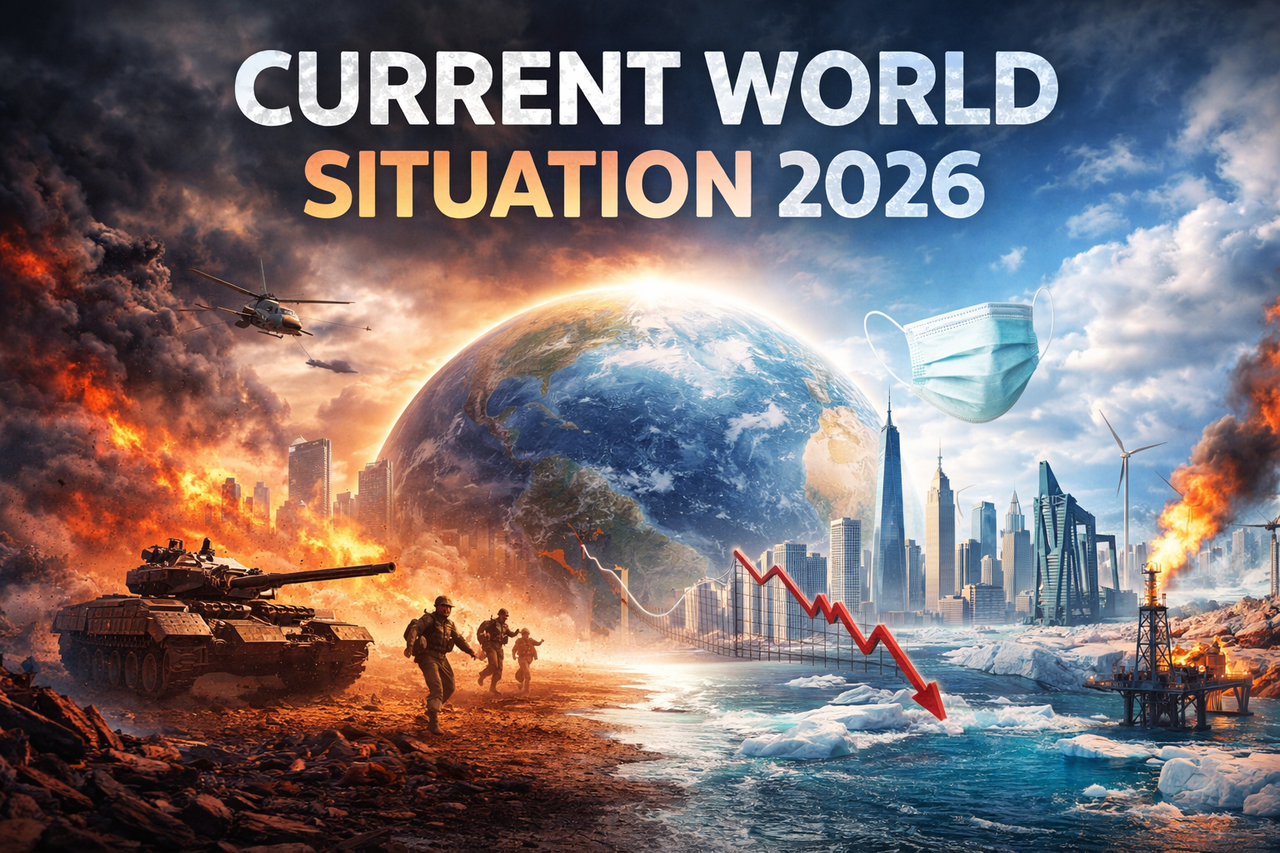
Current World Situation 2026: Global Challenges, Conflicts, Economy, Climate Change and Future Outlook
The world in 2026 stands at a critical turning point. Rapid technological advancements, shifting political alliances, economic uncertainty, and climate challenges are reshaping global dynamics. While humanity has made remarkable progress in science, communication, and development, it also faces complex and interconnected crises that demand urgent attention.
Understanding the current world situation is essential for individuals, governments, and organizations to make informed decisions and contribute to a more stable and sustainable future.
Global Political Landscape
The international political environment remains complex and often unpredictable. Power dynamics are shifting as emerging nations gain influence while traditional powers adapt to new realities.
Organizations like the United Nations continue to play a vital role in maintaining global stability. However, geopolitical tensions and regional conflicts continue to challenge diplomatic efforts.
Rise of Multipolar World
The global order is gradually transitioning from a unipolar system to a multipolar one. This means that multiple countries now share influence over global decisions, making cooperation both necessary and more difficult.
Geopolitical Tensions
Conflicts and tensions persist in several regions, affecting global peace and economic stability. Diplomatic negotiations are ongoing, but lasting solutions remain difficult due to competing interests.
Ongoing Conflicts and Security Concerns
War and conflict continue to shape the modern world. While large-scale global wars have been avoided, regional conflicts still have widespread impacts.
Major Conflict Zones
The ongoing Russia-Ukraine War remains one of the most significant geopolitical crises. It has affected global energy markets, food supply chains, and international relations.
Similarly, tensions in the Middle East continue to influence global security, with periodic escalations affecting neighboring countries and global markets.
Impact on Civilians
Modern conflicts often affect civilians the most. Displacement, loss of livelihood, and limited access to basic services remain major humanitarian concerns.
Global Economic Conditions
The global economy in 2026 is characterized by recovery, uncertainty, and transformation.
Post-Pandemic Recovery
Following the impact of COVID-19, economies are gradually stabilizing. However, the recovery is uneven across regions.
Inflation and Cost of Living
Many countries continue to face inflation, affecting daily life. Rising costs of food, fuel, and housing are major concerns for households worldwide.
Digital Economy Growth
Technology-driven industries are expanding rapidly. E-commerce, artificial intelligence, and digital services are reshaping how people work and interact.
Climate Change and Environmental Challenges
Climate change is one of the most urgent global issues today.
Rising Temperatures
Global temperatures continue to rise, leading to extreme weather events such as heatwaves, floods, and droughts.
Natural Disasters
Frequent disasters are disrupting communities and economies. Coastal regions are particularly vulnerable to rising sea levels.
Global Response
International agreements like the Paris Agreement aim to reduce carbon emissions and limit global warming.
However, progress remains slow, and more coordinated action is needed.
Technological Advancements
Technology is transforming every aspect of life, offering both opportunities and challenges.
Artificial Intelligence
AI is being used in healthcare, education, and business, improving efficiency and innovation. However, it also raises concerns about job displacement and data privacy.
Cybersecurity
As digital systems expand, cybersecurity threats are increasing. Governments and organizations must invest in protecting sensitive data.
Space Exploration
Countries and private companies are investing in space exploration, opening new possibilities for scientific discovery and economic growth.
Social Issues and Human Rights
Social inequality and human rights remain critical concerns.
Income Inequality
The gap between rich and poor continues to widen in many regions, leading to social unrest.
Access to Education and Healthcare
While progress has been made, many people still lack access to basic services.
Migration and Refugees
Conflicts and economic challenges have led to increased migration. Refugee populations require international support and protection.
Public Health Challenges
Healthcare systems worldwide are under pressure.
Pandemic Preparedness
The experience of COVID-19 highlighted the importance of preparedness and global cooperation.
Mental Health Awareness
Mental health issues are gaining recognition as a major global concern, especially among young people.
Healthcare Innovation
Advancements in medicine and technology are improving treatment options and patient care.
Globalization and Cultural Exchange
Globalization continues to connect people and cultures.
Benefits
-Increased trade and economic growth
-Cultural exchange and diversity
-Access to information and technology
Challenges
-Loss of local identity
-Economic dependency
-Spread of misinformation
Energy and Resource Management
Energy demand is increasing as populations grow.
Shift to Renewable Energy
Countries are investing in renewable energy sources such as solar and wind to reduce dependence on fossil fuels.
Resource Scarcity
Water and food resources are under pressure due to climate change and population growth.
Role of International Cooperation
Global challenges require collective action.
Organizations like the United Nations and regional alliances play a crucial role in addressing issues such as climate change, security, and economic stability.
Future Outlook
The future of the world depends on how current challenges are addressed.
Opportunities
-Technological innovation
-Sustainable development
-Global cooperation
Risks
-Escalating conflicts
-Environmental degradation
-Economic instability
Building a Sustainable and Peaceful Future
To create a better future, several steps must be taken:
1. Strengthening Global Governance
Improving international institutions can enhance cooperation.
2. Promoting Sustainable Development
Balancing economic growth with environmental protection is essential.
3. Investing in Education
Education empowers individuals and promotes innovation.
4. Encouraging Responsible Technology Use
Ethical use of technology can prevent misuse and harm.
Conclusion
The current world situation in 2026 is marked by both challenges and opportunities. From geopolitical tensions and economic uncertainty to climate change and technological innovation, the global landscape is evolving rapidly.
While the challenges are significant, they are not insurmountable. Through cooperation, innovation, and responsible decision-making, humanity can navigate these complexities and build a more stable and sustainable future.
The path forward requires commitment from governments, organizations, and individuals alike. By understanding the present and learning from the past, we can shape a world that prioritizes peace, equality, and progress.
You can read more:
-International Cooperation for Global Peace and Stability in a Changing World
-Global Peace Initiative 2026: Board of Peace, Ukraine Talks, and Gaza Ceasefire Efforts Gain Global Attention
-Global Peace Efforts in 2026: Diplomacy, Ceasefires & International Cooperation
-World War and Peace: Causes, Consequences, and the Path Toward Global Stability



Comments
Post a Comment