World War and Peace: Causes, Consequences, and the Path Toward Global Stability
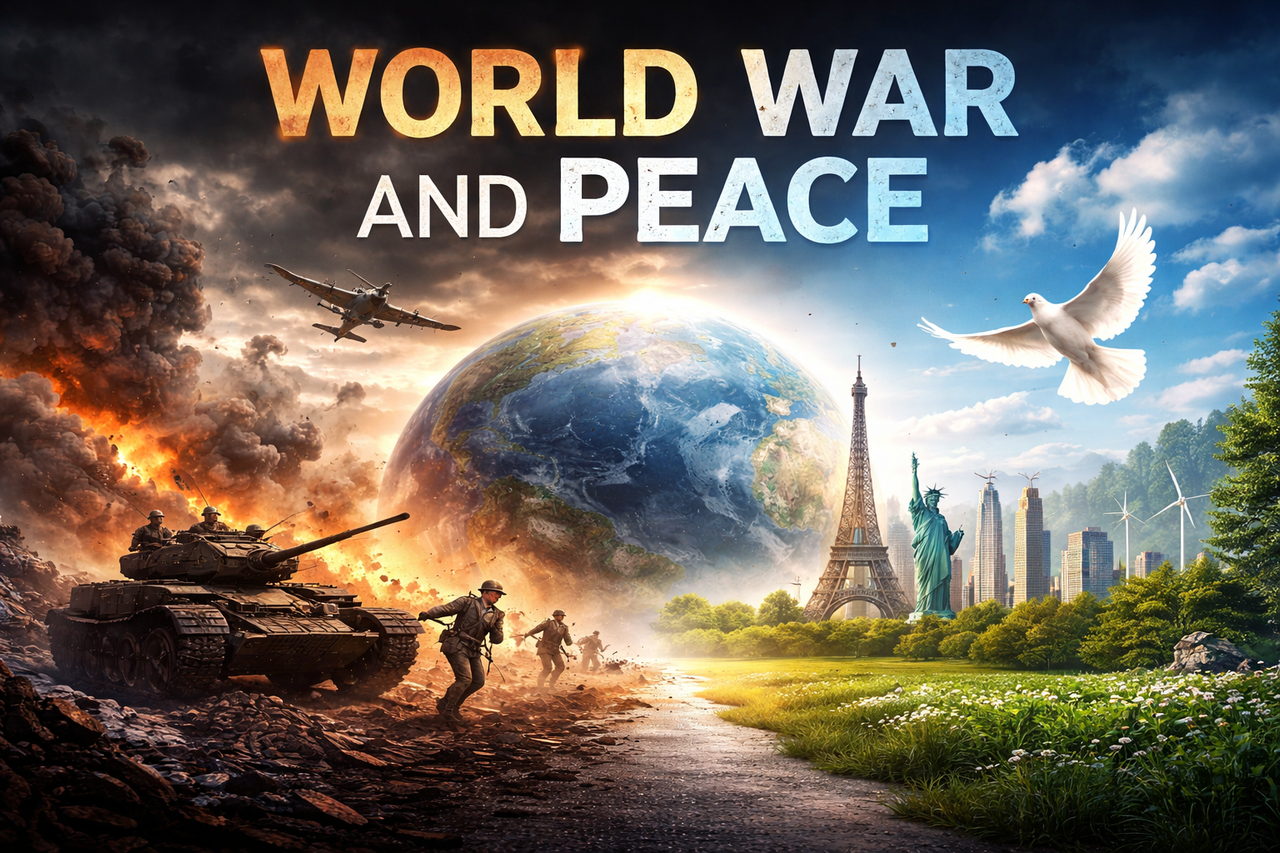
War and peace have shaped the course of human history for centuries. Among the most devastating conflicts were the global wars of the 20th century, which reshaped borders, economies, and international relations. Understanding these wars—and the efforts made to establish peace afterward—is essential to preventing future conflicts and building a more stable world.
Understanding World Wars
A world war is a large-scale conflict involving multiple nations across different continents. The two most significant examples are World War I and World War II, both of which had profound global consequences.
World War I: The Great War
Causes
World War I began in 1914 and was triggered by a complex mix of political tensions and alliances. Key causes included:
-Militarism and arms races
-Alliance systems dividing Europe
-Nationalism
-The assassination of Archduke Franz Ferdinand
Impact
-Over 16 million deaths
-Collapse of major empires (Ottoman, Austro-Hungarian, Russian)
-Economic devastation across Europe
The war ended with the Treaty of Versailles, which imposed harsh penalties on Germany—laying the groundwork for future conflict.
World War II: The Deadliest Conflict
Causes
World War II began in 1939 and was fueled by unresolved tensions from World War I.
Key factors included:
-Rise of authoritarian leaders like Adolf Hitler
-Expansionist policies
-Failure of international peace efforts
Major Events
-Germany’s invasion of Poland
-The Holocaust
-The Atomic bombings of Hiroshima and Nagasaki
Consequences
-Over 70 million deaths
-Massive destruction of cities and infrastructure
-Beginning of the nuclear age
The Concept of Peace
Peace is more than the absence of war. It involves stability, cooperation, and respect among nations.
There are two main types:
-Negative peace: Absence of violence
-Positive peace: Presence of justice, equality, and strong institutions
Global Efforts to Maintain Peace
After World War II, global leaders recognized the need for stronger international cooperation.
Formation of the United Nations
The United Nations was established in 1945 to:
-Prevent future wars
-Promote human rights
-Provide humanitarian aid
It remains one of the most important institutions for global peace.
Cold War: Peace Under Tension
Following World War II, the world entered the Cold War, a period of political and military tension between superpowers.
Although no direct war occurred, the threat of nuclear conflict remained high.
Peace Treaties and Diplomacy
International diplomacy has played a key role in preventing conflicts.
Examples include:
-Arms control agreements
-Trade partnerships
-Conflict resolution through negotiation
Causes of Modern Conflicts
Despite global efforts, conflicts still occur today due to:
-Political instability
-Resource competition (water, oil, land)
-Ethnic and religious tensions
-Economic inequality
Understanding these causes helps in designing effective peace strategies.
The Role of Technology in War and Peace
Technology has transformed both warfare and peacekeeping.
In Warfare
-Advanced weapons systems
-Cyber warfare
-Drones and surveillance
In Peacebuilding
-Early warning systems
-Communication tools for diplomacy
-Data analysis for conflict prevention
The Importance of Education and Awareness
Education plays a crucial role in promoting peace.
-Encourages critical thinking
-Reduces prejudice
-Promotes global citizenship
Young generations must understand the consequences of war to avoid repeating history.
Steps Toward a Peaceful Future
Building lasting peace requires collective effort:
1. Strengthening International Cooperation
Countries must work together to solve global challenges.
2. Promoting Economic Development
Reducing poverty can lower the risk of conflict.
3. Protecting Human Rights
Ensuring equality and justice helps maintain stability.
4. Addressing Climate Change
Environmental stress can lead to conflict over resources.
Lessons from History
The world wars taught humanity valuable lessons:
-War brings widespread destruction
-Peace requires continuous effort
-Cooperation is essential for survival
Conclusion
The history of world wars serves as a powerful reminder of the consequences of conflict. From the devastation of World War I and World War II to the ongoing efforts of the United Nations, humanity has made significant strides toward maintaining peace.
However, the journey is far from over. Modern challenges require innovative solutions, global cooperation, and a shared commitment to peace. By learning from the past and working together, we can build a future where conflict is minimized and harmony prevails.
You can read more:
-International Cooperation for Global Peace and Stability in a Changing World
-Global Peace Efforts in 2026: Diplomacy, Ceasefires & International Cooperation
-United Nations Role in Global Peacekeeping



Comments
Post a Comment