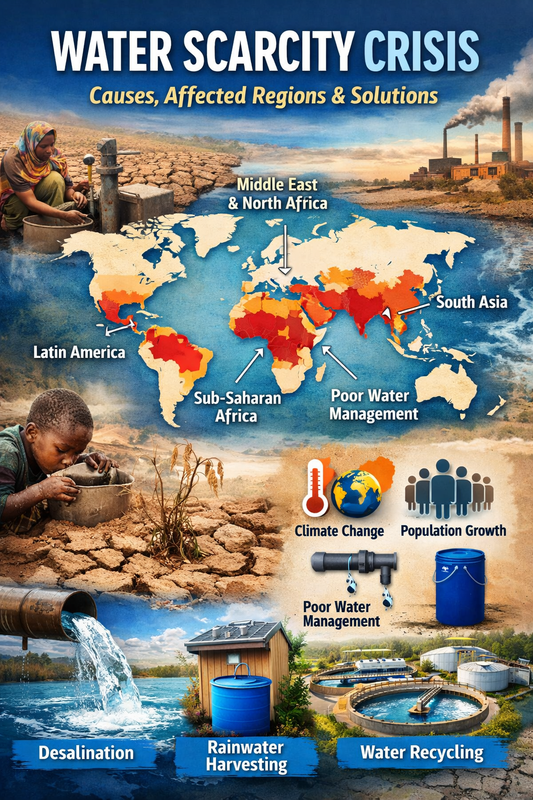
Water Scarcity Crisis: Causes, Most Affected Regions, and Sustainable Solutions
Water is one of the most essential resources for life, yet millions of people around the world struggle daily to access clean and safe water. The global water scarcity crisis is no longer a distant threat—it is a present reality affecting economies, ecosystems, and human health. As populations grow and climate conditions shift, the demand for freshwater continues to rise while supplies become increasingly strained.
Understanding where water scarcity is most severe, why it happens, and how it can be addressed is critical for building a sustainable future.
What Is Water Scarcity?
Water scarcity occurs when the demand for water exceeds the available supply or when poor quality restricts its use. It can be categorized into two main types:
-Physical water scarcity: When natural water resources are insufficient
-Economic water scarcity: When water is available but inaccessible due to lack of infrastructure or management
Both forms impact billions of people worldwide, especially in developing regions.
Major Causes of Water Scarcity
Water scarcity is driven by a combination of environmental and human factors. Some of the most significant causes include:
1. Climate Change
Climate change is altering rainfall patterns, increasing temperatures, and intensifying droughts. Regions that once had reliable water supplies are now experiencing unpredictable weather conditions, making water management more difficult.
2. Population Growth
The global population continues to rise, increasing demand for drinking water, food production, and industrial use. Urban areas, in particular, face intense pressure on water resources.
3. Overuse of Groundwater
Excessive extraction of groundwater for agriculture and industry has led to declining water tables. In many areas, aquifers are being depleted faster than they can be replenished.
4. Pollution
Industrial waste, agricultural runoff, and improper waste disposal contaminate water sources, making them unsafe for human use. Pollution effectively reduces the amount of usable freshwater.
5. Poor Water Management
Inefficient irrigation systems, outdated infrastructure, and lack of policy enforcement contribute to water wastage and unequal distribution.
Regions Most Affected by Water Scarcity
Water scarcity is a global issue, but some regions are significantly more vulnerable due to geographic, economic, and climatic factors.
1. Middle East and North Africa (MENA)
This region is considered the most water-stressed in the world. Countries here receive minimal rainfall and rely heavily on groundwater and desalination.
Key challenges:
-Extremely arid climate
-Limited renewable water resources
-Rapid urbanization
Many countries in this region are already using more water than is naturally available, making long-term sustainability a serious concern.
2. South Asia
South Asia is home to a large portion of the world’s population, placing immense pressure on water resources.
Key issues:
-Over-extraction of groundwater for agriculture
-Seasonal dependence on monsoon rains
-Water pollution in rivers and lakes
Countries in this region face a dual challenge of floods during monsoon seasons and severe shortages during dry periods.
3. Sub-Saharan Africa
In Sub-Saharan Africa, water scarcity is often linked to economic factors rather than physical availability.
Major concerns:
-Lack of infrastructure
-Limited access to clean drinking water
-Frequent droughts
Many communities rely on distant water sources, affecting health, education, and economic productivity.
4. Central and South America
Although parts of this region are rich in water resources, uneven distribution and climate change are creating new challenges.
Key problems:
-Deforestation affecting water cycles
-Urban water shortages
-Increasing drought frequency
Rapid urban growth has outpaced infrastructure development, leading to water stress in major cities.
5. Europe and Central Asia
Some parts of Europe and Central Asia are experiencing growing water stress due to climate variability.
Issues include:
-Reduced rainfall in certain regions
-Aging infrastructure
-Increased agricultural demand
Even traditionally water-rich regions are beginning to face seasonal shortages.
Impacts of Water Scarcity
The consequences of water scarcity are far-reaching and affect multiple aspects of life.
1. Health Risks
Lack of clean water leads to the spread of diseases such as cholera and dysentery. Poor sanitation further worsens public health conditions.
2. Food Insecurity
Agriculture accounts for a large share of water usage. Water shortages reduce crop yields, leading to food scarcity and rising prices.
3. Economic Challenges
Industries depend on water for production. Scarcity can disrupt supply chains, reduce productivity, and slow economic growth.
4. Environmental Degradation
Water scarcity harms ecosystems, leading to loss of biodiversity, drying rivers, and shrinking wetlands.
5. Social Conflict
Competition over limited water resources can lead to disputes between communities, regions, and even countries.
Sustainable Solutions to Water Scarcity
Addressing water scarcity requires a combination of technological innovation, policy reform, and community action.
1. Efficient Water Management
Improving water governance and implementing better policies can significantly reduce wastage.
Strategies include:
-Smart irrigation systems
-Leak detection in pipelines
-Water pricing reforms
2. Rainwater Harvesting
Collecting and storing rainwater can provide an additional source of water, especially in areas with seasonal rainfall.
3. Wastewater Recycling
Treating and reusing wastewater for agriculture and industrial purposes reduces pressure on freshwater supplies.
4. Desalination
Converting seawater into freshwater is an effective solution for coastal regions, although it requires significant energy and investment.
5. Sustainable Agriculture
Farmers can adopt water-efficient practices such as:
-Drip irrigation
-Crop rotation
-Drought-resistant crops
6. Public Awareness and Education
Encouraging responsible water use at the household level can make a significant difference.
Simple actions include:
-Fixing leaks
-Reducing water waste
-Using water-efficient appliances
The Role of Technology in Solving Water Scarcity
Modern technology offers promising solutions to address water challenges.
1. Smart Water Systems
Digital tools can monitor water usage, detect leaks, and optimize distribution networks.
2. Artificial Intelligence
AI can predict droughts, manage water resources, and improve agricultural efficiency.
3. Innovative Filtration
Advanced filtration technologies make it easier to purify contaminated water.
Why Immediate Action Is Necessary
The global water crisis is expected to worsen if immediate action is not taken. Rising temperatures, growing populations, and increasing demand will continue to strain water resources.
Governments, businesses, and individuals must work together to ensure sustainable water use. Investments in infrastructure, technology, and education are essential to prevent future crises.
Conclusion
Water scarcity is one of the most pressing challenges of the 21st century. While some regions are already facing severe shortages, the problem is expanding globally due to climate change and human activity.
By understanding the causes and impacts of water scarcity, we can take meaningful steps toward sustainable solutions. From efficient water management to technological innovation, there are many ways to address this crisis. However, collective action is crucial.
Ensuring access to clean and safe water is not just an environmental issue—it is a fundamental human right. The decisions we make today will determine whether future generations have enough water to survive and thrive.
You can read more related articles here:
-Regional Climate Cooperation Efforts Expand as Countries Unite Against Climate Change
-Global Climate Change in 2026: Major Environmental Challenges and Solutions
-Global Food Shortages Linked to Climate Change: Causes, Impacts & Long-Term Solutions
-Sustainable Agriculture and the Future of Food: How Farming Innovation Can Feed the World



Comments
Post a Comment