Introduction
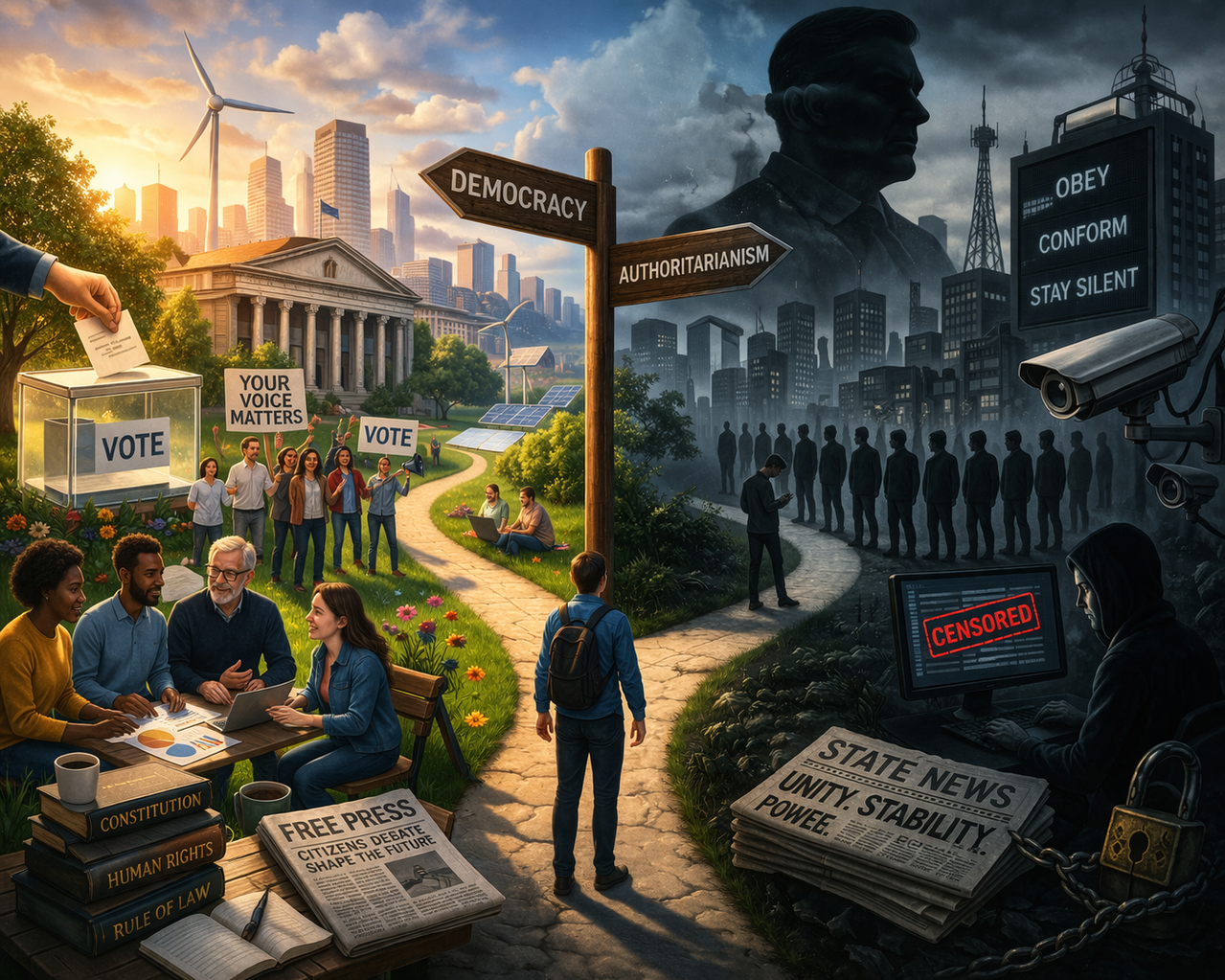
The early decades of the 21st century have witnessed a profound ideological contest shaping global politics: the ongoing debate between democracy and authoritarianism. This struggle is not new, but its intensity and global implications have grown significantly in recent years. From shifting alliances and technological transformations to economic rivalries and social unrest, the balance between democratic governance and authoritarian control is being tested across continents.
This article explores the evolving dynamics of this debate, examining the strengths, weaknesses, and future trajectories of both systems in a rapidly changing world.
The Foundations of Democracy
Democracy, at its core, is a system of governance in which power is vested in the people. It is characterized by free and fair elections, rule of law, separation of powers, and protection of individual rights and freedoms. Democracies promote transparency, accountability, and public participation.
Historically, democratic systems have been associated with higher levels of economic development, innovation, and social welfare. Open societies often encourage creativity and entrepreneurship, leading to technological advancement and economic growth.
However, democracy is not without its challenges. Political polarization, misinformation, declining trust in institutions, and electoral manipulation have raised concerns about the resilience of democratic systems in many parts of the world.
The Rise of Authoritarianism
Authoritarianism, by contrast, concentrates power in the hands of a single leader or a small group. These systems often limit political freedoms, suppress dissent, and control media and information flows. Despite these restrictions, authoritarian regimes have demonstrated a surprising degree of adaptability and resilience.
In recent years, some authoritarian governments have showcased rapid economic growth, infrastructure development, and decisive policymaking. Their ability to implement long-term strategies without the delays of democratic processes is often cited as an advantage.
Moreover, advances in surveillance technology, artificial intelligence, and data analytics have enabled authoritarian regimes to strengthen control over their populations. Digital authoritarianism has emerged as a new model, combining technological sophistication with political repression.
The Role of Technology
Technology has become a central battleground in the democracy versus authoritarianism debate. On one hand, digital tools empower citizens, enabling greater access to information, mobilization of social movements, and increased political participation.
On the other hand, the same technologies can be used for surveillance, censorship, and manipulation. Social media platforms have been exploited to spread disinformation, influence elections, and deepen societal divisions.
Artificial intelligence and big data are further complicating the landscape. While democracies struggle to regulate these technologies without infringing on freedoms, authoritarian regimes often deploy them aggressively to monitor and control behavior.
Economic Dimensions of the Debate
Economic performance plays a crucial role in shaping perceptions of governance systems. For decades, democracies were seen as the most effective engines of prosperity. However, the rapid economic rise of certain authoritarian states has challenged this assumption.
State-led development models have delivered impressive results in some regions, lifting millions out of poverty and transforming economies. This has led some observers to question whether authoritarian governance can be more efficient in achieving economic goals.
Yet, critics argue that such growth often comes at a cost—limited labor rights, environmental degradation, and lack of transparency. Furthermore, long-term sustainability remains uncertain, particularly in the absence of institutional checks and balances.
Global Geopolitics and Power Rivalries
The democracy-authoritarianism divide is increasingly shaping global geopolitics. Alliances and international relations are often influenced by governance models, leading to the formation of blocs with shared political values or strategic interests.
Competition between major powers has intensified, with each promoting its own model of governance. This rivalry extends beyond military and economic domains into areas such as technology, infrastructure development, and global governance institutions.
Developing nations, in particular, find themselves navigating this complex landscape. Many are balancing relationships with both democratic and authoritarian powers, seeking economic benefits while maintaining political autonomy.
Challenges Facing Democracies
Despite their ideals, democracies are facing significant internal and external pressures. Rising populism, economic inequality, and cultural divisions have eroded trust in democratic institutions in many countries.
Elections, once seen as the cornerstone of democracy, are increasingly contested and sometimes marred by allegations of fraud or interference. The spread of misinformation has further undermined public confidence.
Additionally, democratic governments often struggle to respond quickly to crises due to bureaucratic processes and political disagreements. This has led to comparisons with authoritarian systems that can act more decisively.
Authoritarianism’s Limitations
While authoritarian regimes may appear stable and efficient, they also face inherent vulnerabilities. The concentration of power can lead to corruption, lack of accountability, and policy errors that go unchallenged.
Public dissent, though often suppressed, can build beneath the surface and erupt unexpectedly. Without mechanisms for peaceful political change, such unrest can lead to instability.
Moreover, the absence of transparency and independent institutions can hinder innovation and long-term economic resilience. Overreliance on centralized control may limit adaptability in a rapidly evolving global environment.
The Influence of Culture and History
The debate between democracy and authoritarianism is not solely about governance structures; it is also shaped by cultural, historical, and social factors. Different societies have unique political traditions and experiences that influence their preferences.
In some regions, strong central authority is seen as necessary for stability and development. In others, democratic values are deeply ingrained and widely supported.
Understanding these nuances is essential for analyzing global political trends. The imposition of one model over another without regard for local context often leads to conflict and resistance.
The Future of the Debate
Looking ahead, the global contest between democracy and authoritarianism is likely to intensify. Several key factors will shape its trajectory:
1. Technological Evolution
The continued development of digital technologies will play a decisive role. The balance between freedom and control in the digital space will influence governance models worldwide.
2. Economic Shifts
Global economic changes, including trade patterns and resource distribution, will impact the appeal of different systems.
3. Climate Change
The need for coordinated action on climate change may test both democratic and authoritarian systems. Effective governance will be crucial in addressing environmental challenges.
4. Public Expectations
As citizens become more informed and connected, expectations for accountability, transparency, and performance will rise.
Conclusion
The debate between democracy and authoritarianism is one of the defining issues of our time. It is not a simple binary choice but a complex and evolving contest shaped by multiple factors.
Democracy offers freedom, accountability, and participation but faces challenges in maintaining stability and trust. Authoritarianism provides efficiency and control but risks repression and lack of accountability.
Ultimately, the future of global governance will depend on how these systems adapt to changing realities. The most successful models may be those that can combine effective leadership with respect for human rights and public participation.
As the world navigates this critical juncture, the outcome of this debate will have profound implications for peace, prosperity, and the future of humanity.
You can read more:
-Peace Negotiations in Conflict Zones: Global Challenges and Diplomatic Solutions
-Global Diplomatic Maneuvers Intensify as Trade Tensions and Tech Regulation Reshape World Order
-International Cooperation for Global Peace and Stability in a Changing World



Comments
Post a Comment